
Addiction Treatment in Rural Indiana: Barriers, Solutions, and How to Get Help
37 Indiana counties are treatment deserts with 67-mile average drives to care.


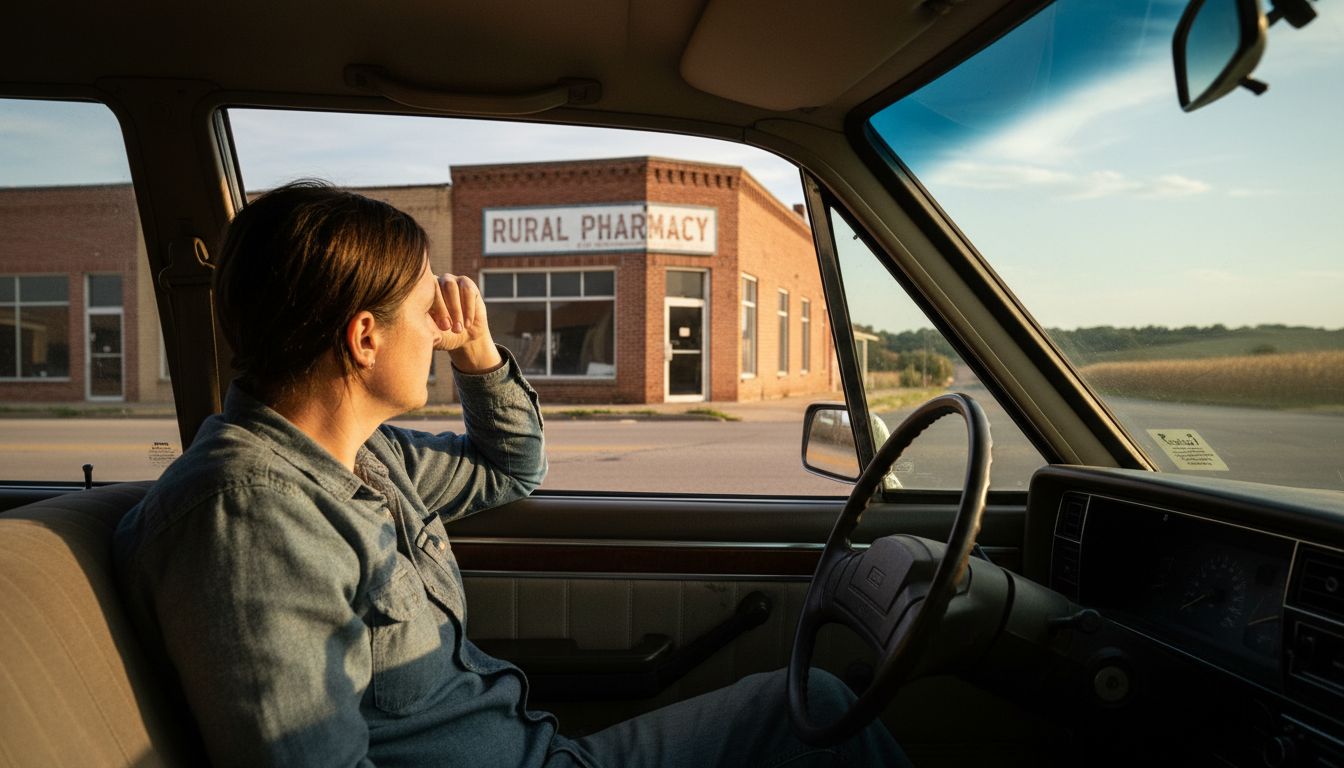
If you live in Indianapolis, Fort Wayne, or South Bend, addiction treatment is within reach — dozens of facilities, multiple levels of care, insurance navigators who answer the phone. But if you live in Adams County, Crawford County, or any of the 37 Indiana counties classified as treatment deserts, the nearest treatment facility might be a 67-mile drive away. That drive — on rural highways, with no public transit, possibly while in withdrawal — is why so many rural Hoosiers never get the help they need.
According to our 2026 State of Addiction analysis, 2.1 million Indiana residents live in counties with critically low treatment facility density. Rural counties have overdose death rates climbing faster than urban ones, and the treatment capacity gap continues to widen.
37 counties designated as treatment deserts (fewer than 0.5 facilities per 10,000 residents) | 67 miles median drive to nearest facility from desert counties | 42% of desert-area facilities offer MAT (vs. 78% statewide) | 58% of rural Hoosiers live in counties with insufficient treatment capacity
The Five Barriers Rural Hoosiers Face
1. Geographic Distance
This is the most obvious barrier and the hardest to solve structurally. When the nearest IOP program is 45 minutes away, attending three sessions per week means 4.5 hours of driving — on top of work, childcare, and daily responsibilities. For detox, the distance is even more dangerous: driving while in active withdrawal is unsafe, and waiting for withdrawal to pass before driving means missing the narrow window when someone is willing to seek help.
2. Provider Shortages
Rural Indiana counties have fewer licensed addiction counselors, psychiatrists, and MAT prescribers per capita than urban areas. Some counties have zero addiction medicine specialists. This means even when a facility exists nearby, wait lists can stretch weeks or months — and in addiction treatment, a two-week wait often means the person relapses or changes their mind.
3. Stigma Amplified by Small Communities
In a town of 3,000, everyone knows everyone. Walking into the county's only treatment facility — or being seen in the parking lot — means your neighbors, coworkers, church members, and children's teachers may find out. This fishbowl effect is exponentially more powerful than urban anonymity and is the number-one reason cited by rural residents for delaying treatment.
4. Transportation
Rural Indiana has essentially no public transit. If you don't own a reliable car — common among people in active addiction — you cannot get to treatment. Ride-sharing services like Uber are unavailable or prohibitively expensive in rural areas. Some people rely on friends or family members for rides, creating dependence and potential exposure to triggers.
5. Cost and Insurance Gaps
Rural Indiana has higher uninsured rates than urban areas. Many rural workers are employed by small businesses that don't offer health insurance, or they work seasonal/agricultural jobs with no benefits. While Indiana's Healthy Indiana Plan (HIP) provides Medicaid coverage, enrollment barriers persist — and some rural facilities have limited capacity to accept Medicaid patients.
Solutions That Are Working
Telehealth: The Game-Changer
Virtual treatment eliminates the geographic barrier entirely. A person in a treatment desert county can access the same quality IOP programming and therapy as someone in Indianapolis — from their living room. Since pandemic-era regulations made telehealth MAT permanent, rural patients can now get Suboxone prescribed via video call without ever driving to a clinic. This single policy change has done more for rural treatment access than any new facility construction.
Community Mental Health Centers
Indiana's 24 CMHCs are designed to cover all 92 counties. While their satellite offices in rural areas may be small, they provide outpatient addiction counseling, MAT, crisis services, and sliding-scale fees for uninsured patients. Your local CMHC is often the best starting point — call 2-1-1 to find yours.
Mobile Treatment Units
Several Indiana organizations have deployed mobile clinics — vans staffed with counselors and nurse practitioners that rotate through treatment desert counties on set schedules. These units can provide assessment, treatment initiation, MAT prescribing, and naloxone distribution without requiring patients to travel.
Primary Care Integration
Rural primary care physicians are increasingly trained to screen for and treat substance use disorders. With the elimination of the X-waiver requirement for buprenorphine prescribing, any licensed physician can now prescribe Suboxone. This means your family doctor — the one provider who is already in your small town — can initiate MAT without you needing to see an addiction specialist.
Faith-Based and Peer Support Networks
Rural communities often have strong church networks. While faith-based programs aren't a substitute for clinical treatment, they provide recovery support, sober social networks, and practical help (rides, meals, childcare) that facilitate treatment engagement. Peer recovery coaches with lived experience are also being deployed through Indiana's DMHA-funded programs to bridge the gap between rural residents and formal treatment systems.
Practical Steps If You Live in Rural Indiana
- Call (888) 568-9930 — our free treatment navigators can identify options in or near your county, including telehealth programs
- Ask your family doctor about MAT — they can now prescribe Suboxone without special certification
- Explore virtual treatment — telehealth IOP and outpatient counseling eliminate the distance barrier
- Contact your local CMHC (call 2-1-1) — they serve your county regardless of insurance
- Verify your insurance — HIP/Medicaid covers addiction treatment at no cost; if uninsured, CMHCs offer sliding-scale fees
- Get naloxone — available without a prescription at any Indiana pharmacy. Carry it. It saves lives.
The barriers are real, but they are not insurmountable. Every solution above exists today, right now, for Indiana residents. The hardest step is the first one — and it can start with a phone call from your kitchen table.