Anxiety and Addiction: Breaking Free From the Cycle
Anxiety disorders affect 40 million U.S. adults — and the benzodiazepine-anxiety cycle is particularly dangerous. Learn about the connection, the benzo trap, and integrated treatment approaches.



Anxiety disorders are the most prevalent mental health conditions in the United States, affecting 40 million adults according to the Anxiety and Depression Association of America — and the overlap with substance use disorder is staggering. People with anxiety are twice as likely to develop addiction, according to NIDA comorbidity research, often because substances provide the fastest (if most destructive) form of relief.
The relationship between anxiety and addiction is a trap: substances temporarily quiet the anxious mind, but as tolerance builds and dependence takes hold, the anxiety returns worse than before — now compounded by withdrawal, shame, and the consequences of substance use.
This guide examines why anxiety and addiction co-occur so often, explores the particularly dangerous benzodiazepine cycle, and outlines the integrated treatment approaches that address both conditions in Indiana.
Anxiety disorders affect 40 million U.S. adults (19.1%). About 20% of people with an anxiety disorder also have a substance use disorder, and 20% of people with a SUD have an anxiety disorder. The benzodiazepine dependence cycle traps millions.
Source: ADAA; NIDA Comorbidity Report
Why Anxiety and Addiction Often Co-Occur
The neuroscience is straightforward: anxiety disorders involve an overactive amygdala (threat detection center) and insufficient GABA (the brain's calming neurotransmitter). Substances that enhance GABA activity — alcohol, benzodiazepines, barbiturates — provide immediate relief by quieting the overactive threat response.
This creates a learning cycle:
- Anxiety triggers distress → the brain searches for relief
- Substance provides relief → the brain records this as an effective strategy
- Repeated use builds tolerance → more substance needed for the same effect
- The brain downregulates natural GABA → baseline anxiety increases
- Withdrawal anxiety exceeds original anxiety → more substance needed just to feel "normal"
The Benzodiazepine Trap
The most dangerous intersection of anxiety and addiction is benzodiazepine dependence. Benzodiazepines like Xanax, Valium, and Klonopin are prescribed specifically for anxiety — but they carry significant addiction risk:
- Rapid tolerance: Therapeutic effect diminishes within 2–4 weeks, requiring dose increases
- Physical dependence: The brain becomes unable to produce adequate GABA without the drug
- Rebound anxiety: Anxiety between doses is worse than the original condition — driving escalating use
- Dangerous withdrawal: Stopping abruptly can cause seizures and death (see our Xanax withdrawal guide)
- Cognitive effects: Long-term use impairs memory, attention, and processing speed
The irony: the medication prescribed to treat anxiety creates a form of anxiety dependence that is harder to treat than the original condition. This is why most addiction psychiatrists now recommend non-benzodiazepine alternatives as first-line treatment for anxiety disorders.
Alcohol as an Anxiety Crutch
Alcohol is the most commonly used anxiolytic (anxiety-reducing) substance, partly because it's legal, socially acceptable, and widely available. Many people with social anxiety, generalized anxiety, or panic disorder discover that alcohol "takes the edge off" — and gradually become dependent on it to function in anxiety-provoking situations.
The problem: alcohol is a CNS depressant that temporarily reduces anxiety but causes rebound anxiety as it wears off. Chronic heavy drinking actually rewires the brain to be more anxious — through glutamate upregulation, serotonin disruption, and cortisol elevation.
Treating Both Conditions Together
Integrated dual diagnosis treatment is essential. Treating anxiety without addressing addiction leads to continued self-medication. Treating addiction without addressing anxiety leaves the primary trigger unresolved. Effective integrated approaches include:
- Cognitive Behavioral Therapy (CBT): The gold standard for both anxiety and addiction. Teaches patients to identify anxious thought patterns, challenge catastrophic thinking, and develop healthy coping strategies.
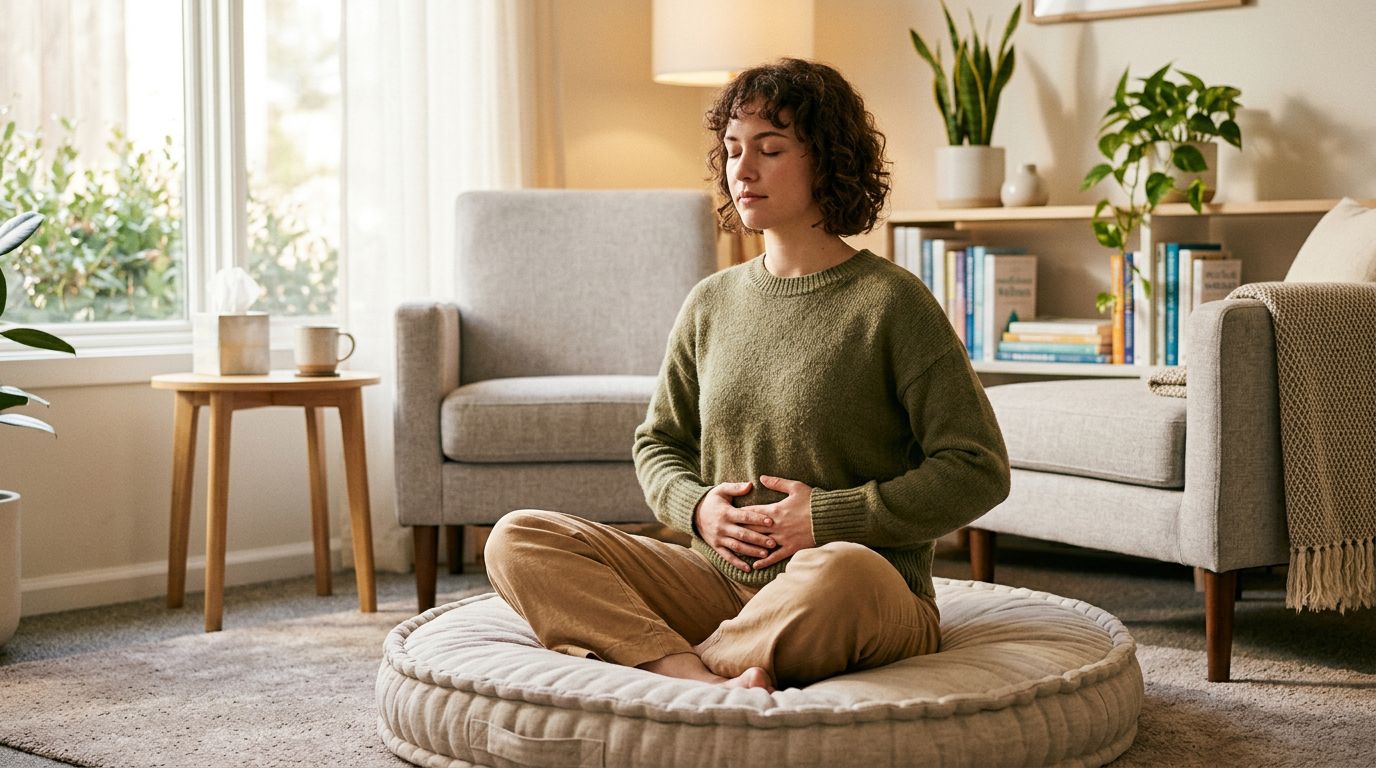
- Mindfulness-Based Stress Reduction (MBSR): Meditation and body-scan practices that reduce anxiety physiologically — without medication. Growing evidence supports mindfulness as an effective relapse prevention tool.
- Exposure therapy: Gradual, supported confrontation with anxiety triggers builds natural confidence and reduces avoidance behavior.
- Acceptance and Commitment Therapy (ACT): Teaches acceptance of anxious feelings rather than avoidance — reducing the drive to self-medicate.
Medication Considerations
Non-addictive medications that effectively treat anxiety in people with addiction history:
| Medication | Type | Best For | Addiction Risk |
|---|---|---|---|
| Escitalopram (Lexapro) | SSRI | GAD, social anxiety, panic | None |
| Venlafaxine (Effexor) | SNRI | GAD, social anxiety | None |
| Buspirone | Anxiolytic | GAD | None |
| Hydroxyzine | Antihistamine | Acute anxiety, insomnia | None |
Important: SSRIs and SNRIs take 2–4 weeks to reach full effectiveness. During this window, non-addictive options like hydroxyzine or buspirone can provide bridge relief. Benzodiazepines should be avoided for anxiety in anyone with a substance use history.
Indiana Treatment Options for Co-Occurring Anxiety
- Anxiety treatment programs: Indiana facilities specializing in anxiety disorders
- Dual diagnosis programs: Integrated anxiety-addiction treatment
- Outpatient counseling: CBT and medication management in a flexible format
- Mindfulness-based programs: Meditation and stress reduction
- Verify your insurance: Dual diagnosis treatment is fully covered
Anxiety doesn't have to control your life — and substances aren't the answer. Effective, non-addictive treatments exist, and Indiana has programs that address both conditions together. Take our free assessment or call 1-800-662-4357.