College Drinking in Indiana: When Partying Becomes a Problem
Indiana has 100+ colleges with active drinking cultures. NIAAA data shows 1 in 4 college students meets criteria for alcohol use disorder. Binge drinking norms, signs it has crossed the line, and campus/community resources for Indiana students.


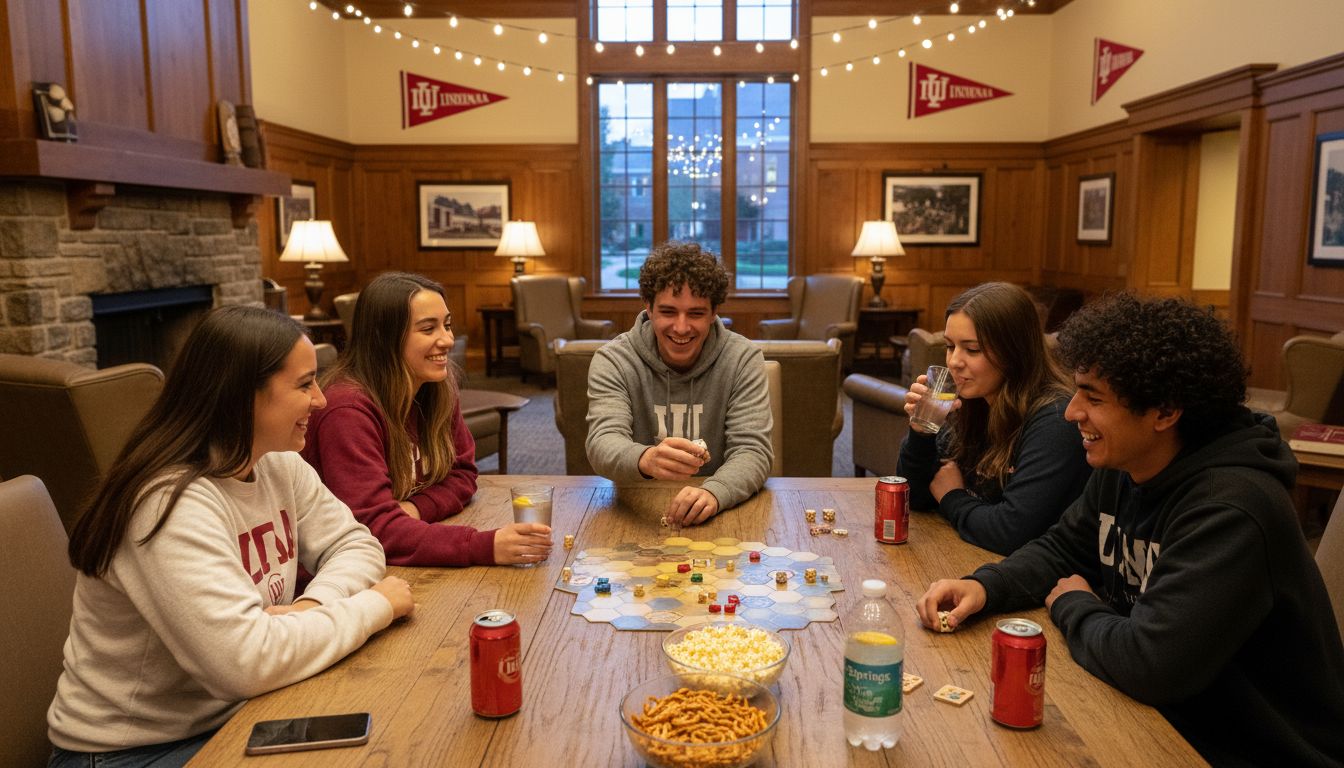
At Indiana's 100+ colleges and universities, drinking isn't just normalized — it's ritualized. Welcome Week. Tailgating. Greek life formals. Thursday night dollar beers. The social architecture of college life in Indiana is built around alcohol to a degree that makes it nearly impossible to distinguish "normal college drinking" from the early stages of alcohol use disorder.
The National Institute on Alcohol Abuse and Alcoholism (NIAAA) reports that approximately 1 in 4 college students meets diagnostic criteria for alcohol use disorder. Among Indiana schools — from IU Bloomington to Purdue, Ball State to Indiana State — the drinking culture is deeply embedded and rarely questioned until something goes catastrophically wrong.
1,519 college students die annually from alcohol-related injuries | 696,000 are assaulted by another student who was drinking | 97,000 experience alcohol-related sexual assault | 1 in 4 students report academic consequences from drinking | Binge drinking rate among college students: 33%
Source: NIAAA College Fact Sheet
When "Normal" Becomes a Problem
The challenge with college drinking is that the environment makes excessive drinking look normal. Here are the signs that someone has crossed from heavy social drinking to a clinical problem:
| Normal College Drinking | Problem Drinking (Warning Signs) |
|---|---|
| Drinks at social events on weekends | Drinks alone, during the week, or before classes |
| Occasionally has too many but laughs it off | Regularly blacks out or can't remember portions of the night |
| Can take it or leave it — skips parties sometimes | Plans entire social calendar around drinking; avoids sober events |
| Grades remain stable | Missing classes, failing exams, academic probation |
| No legal issues | MIP citations, DUI, dorm violations, Title IX involvement |
| Can stop after 2-3 drinks when they want to | Cannot control how much they drink once they start |
Indiana-Specific Risk Factors
Several factors make Indiana college campuses particularly high-risk:
- Greek life prevalence: Indiana universities have large Greek systems where alcohol is central to recruitment, social events, and culture. Greek-affiliated students drink more and more frequently than non-affiliated peers.
- Tailgating culture: Indiana's Big Ten schools (Purdue, IU) have intense football tailgating cultures that normalize day-long binge drinking
- Rural campus isolation: Smaller Indiana colleges in rural areas have limited entertainment options — bars and house parties become the default social outlet
- 21-and-under access: Despite being illegal, underage access to alcohol is functionally unrestricted at most Indiana campuses through older friends, fake IDs, and house parties
The Lifeline Law: Protection for Students Who Call for Help
Indiana's Lifeline Law provides critical immunity for students under 21 who call 911 for alcohol-related medical emergencies. If a friend has alcohol poisoning, you will not be charged with minor in possession (MIP) for calling 911 — as long as you provide your name, stay at the scene, and cooperate with responders. This law exists because students were letting friends die rather than calling for help out of fear of legal consequences.
Campus and Community Resources
Every Indiana college and university offers some level of substance use support:
- Campus counseling centers: Free short-term counseling for enrolled students — typically 6-12 sessions per academic year
- BASICS (Brief Alcohol Screening and Intervention for College Students): A harm-reduction program offered at many Indiana campuses that helps students evaluate their drinking without requiring abstinence
- Collegiate Recovery Programs: IU Bloomington, Purdue, and IUPUI have established recovery communities for students in recovery — sober housing, peer support, and academic accommodations
- Student health services: Can screen for alcohol use disorder and refer to appropriate treatment
- Community treatment: Outpatient programs and IOP near campus allow students to continue coursework while receiving treatment
- Virtual therapy: Telehealth counseling that fits between classes and doesn't require visiting a visible campus office
For Parents: Having the Conversation
If your child is at an Indiana college and you're worried about their drinking, avoid ultimatums and lectures — they don't work. Instead:
- Express concern, not judgment: "I've noticed some changes and I'm worried about you" rather than "You're drinking too much"
- Ask questions: "How are you really doing?" "Do you feel in control?" "Is drinking causing any problems?"
- Know the resources: Be ready to offer specific help — their campus counseling center's number, a guide to insurance coverage, or our treatment line at (888) 568-9930
- Understand confidentiality: If your child is 18+, FERPA and HIPAA restrict what the university can tell you about counseling. Your child must consent to share information.
College drinking doesn't have to define a student's trajectory. Verify insurance coverage — most parent-held plans cover addiction treatment for dependents up to age 26 under the ACA.
The Science of College-Age Drinking Risk
There is a neurological reason college-age drinking is particularly dangerous beyond the social risks. The human brain is not fully developed until approximately age 25. The prefrontal cortex — responsible for impulse control, risk assessment, and decision-making — is the last region to mature. Heavy alcohol exposure during this developmental window causes measurable structural damage that can permanently impair executive function, memory consolidation, and emotional regulation.
This means a 20-year-old who binge drinks twice weekly is not just risking a bad hangover — they are potentially altering their brain architecture during a critical developmental period. The damage is invisible until it isn't: difficulty concentrating, poor academic performance, emotional volatility, and increased susceptibility to addiction later in life.
Substance Use Beyond Alcohol
While alcohol dominates the conversation, Indiana college students also face rising rates of:
- Cannabis: Increasingly normalized, especially edibles. Daily use rates among college students have reached historic highs. Can impair motivation, memory, and academic performance with chronic use.
- Prescription stimulants (Adderall, Vyvanse): Misused as "study drugs" by 15-20% of college students. Creates cardiovascular risk and can trigger anxiety and psychosis at high doses.
- Cocaine: Present in Greek life and party scenes, often used alongside alcohol, amplifying cardiac risk.
- Vaping/nicotine: 25%+ of college students use e-cigarettes. Nicotine addiction is frequently the first substance use disorder, and it establishes neural addiction pathways that increase vulnerability to other substances.
When to Seek Professional Help
Consider professional assessment if any of these apply:
- You have tried to cut back or stop and could not
- Drinking or drug use has caused legal consequences (DUI, MIP, Title IX)
- Your GPA has dropped significantly since substance use increased
- You are drinking or using alone, not just socially
- Friends or family have expressed concern
- You are experiencing depression, anxiety, or suicidal thoughts related to use
- You have blacked out more than once
Indiana treatment options for college students include outpatient counseling that fits around classes, evening IOP programs, telehealth therapy accessible from a dorm room, and campus counseling centers that provide free short-term support. Verify your insurance — your parents' plan covers you until age 26 under the ACA, and most plans cover addiction treatment with no separate deductible under mental health parity law.
Getting help now — while you are young, resilient, and surrounded by educational opportunity — is infinitely easier than trying to address it at 35 with a career, mortgage, and family at stake. Call (888) 568-9930 for confidential guidance.