How to Stage an Intervention in Indiana: A Step-by-Step Guide
Compare Johnson, ARISE, and CRAFT intervention models. Planning checklist, impact statement template, what to do if they say no, and Indiana interventionists.


Watching someone you love destroy their life with addiction is one of the most painful experiences a family can endure. You've tried reasoning, begging, threatening, ignoring — nothing works. At some point, love alone isn't enough, and a structured intervention becomes the most compassionate option left.
An intervention is not an ambush or an attack. Done correctly — with planning, a professional facilitator, and pre-arranged treatment — interventions succeed 80–90% of the time. This guide walks you through the three major intervention models, provides a detailed planning checklist, sample impact statement structure, and explains exactly what to do whether your loved one says yes or no. For broader family support resources, visit our dedicated page.
Professional interventions have a success rate of 80–90% when properly planned with a certified specialist. The critical success factors: choosing the right model, thorough preparation, having treatment lined up in advance, and every team member committing to follow through on stated consequences.
Source: Association of Intervention Specialists
What Is an Intervention?
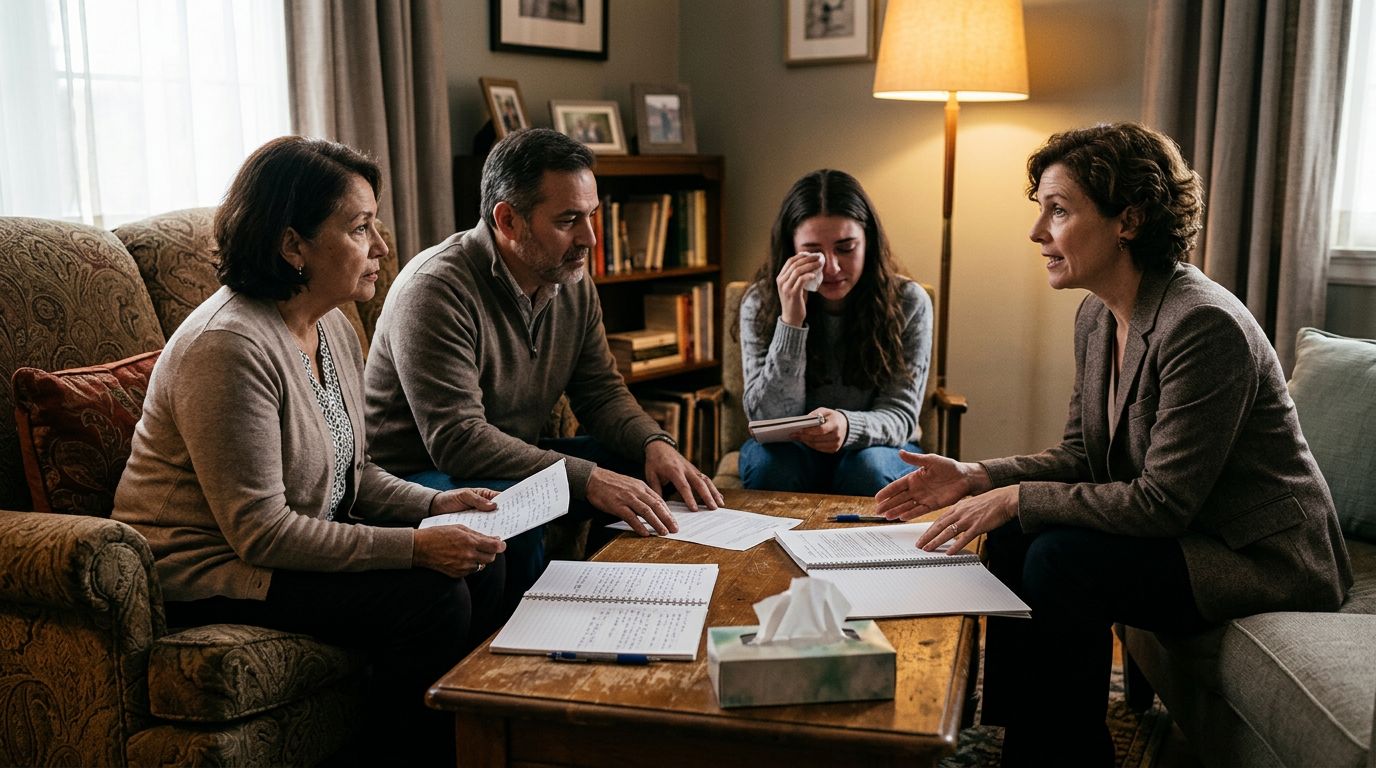
An intervention is a carefully planned, structured meeting where people who care about someone with addiction come together to:
- Express love and concern — not anger or blame
- Share specific examples of how the addiction has affected each person in the room
- Present a pre-arranged treatment option — a specific facility with a bed reserved, bags packed, ready to go immediately
- State clear consequences if the person refuses help — not empty threats, but boundaries each person is prepared to enforce
The goal is not confrontation — it is a coordinated expression of love coupled with an actionable path forward. The most effective interventions leave the person feeling cared for, not cornered.
Types of Intervention Models (Johnson, ARISE, CRAFT)
Three evidence-based models dominate professional intervention practice. Each suits different situations:
| Model | Approach | Best For | Success Rate |
|---|---|---|---|
| Johnson Model | Surprise confrontation — the person doesn't know about the meeting until it begins | Individuals in deep denial who would avoid or sabotage a planned meeting | ~90% with professional |
| ARISE | Invitational, graduated — person is invited to participate from the start, with escalating steps if they decline | When preserving the relationship is paramount; less confrontational; first-time interventions | ~83% enter treatment |
| CRAFT | No direct confrontation — trains family members to change their own behavior to naturally encourage the person to seek treatment | When the person is volatile or dangerous; when confrontation has failed; when the family needs support regardless of outcome | ~64–74% enter treatment |
A professional interventionist can help you determine which model is appropriate based on the person's temperament, the substance involved, the family dynamics, and safety considerations.
Planning Your Intervention Step by Step
Thorough preparation is the difference between success and failure. Follow this checklist:
- Consult a professional interventionist: The investment ($1,500–$10,000) dramatically increases your chances of success. The Association of Intervention Specialists maintains a directory of certified professionals. Many offer phone consultations to help you decide if a formal intervention is appropriate.
- Form the intervention team: Choose 4–8 people the individual respects and cares about — spouse, parents, siblings, close friends, employer, spiritual leader. Exclude anyone currently using substances, anyone who may become confrontational or emotional beyond control, and anyone the person has a severely damaged relationship with.
- Research and reserve treatment: Have a specific treatment facility ready to accept them immediately — that day, that hour. Call the facility, confirm bed availability, verify insurance coverage, and pack a bag with essentials (clothing, toiletries, insurance card, ID). The window between saying yes and actually entering treatment must be as short as possible — delay creates opportunity for backing out. Search Indiana treatment centers to find the right program.
- Write impact statements: Each team member writes a personal letter (1–2 pages) following this structure — and rehearses reading it aloud.
- Rehearse together: Meet without the person present at least once to practice reading statements, anticipate reactions (anger, crying, deflection, bargaining, walking out), and agree on consequences. The facilitator guides this rehearsal.
- Set consequences — and mean them: Each person decides what they will do if the person refuses help. These must be real boundaries they are prepared to enforce — not empty threats. Examples: "I will not allow you to live in my home," "I will not give you any more money," "I will file for full custody."
- Choose the time and place: Early morning (before substance use begins for the day). A private, neutral location — the person's home, a family member's home, or the interventionist's office. Never in public.
Writing Impact Statements That Work
Impact statements are the heart of the intervention. Each one follows a simple, powerful structure:
- "I love you because..." — Begin with love. Share specific positive memories. Remind them of who they are beyond the addiction. ("I love you because you're the person who taught me to ride a bike. You stayed up all night when I was sick. You are my best friend.")
- "I have seen..." — Describe specific incidents — not generalizations — where addiction caused harm. Dates, details, facts. ("On Thanksgiving, you passed out at the dinner table in front of your children. Last Tuesday, I found you unconscious in your car in the driveway at 3 AM.")
- "It made me feel..." — Share the emotional impact honestly. Use "I" statements. ("It made me feel terrified. I lay awake every night wondering if tonight is the night I get the phone call.")
- "I am asking you to..." — The specific, actionable request. ("I am asking you to go to [facility name] today. A bed is waiting for you. Your bag is packed. We will drive you there.")
- "If you choose not to..." — Your boundary. Stated with love, not anger. ("If you choose not to accept help today, I love you, but I will not continue to watch you die. I will not give you money or a place to stay until you are in treatment.")
Choosing a Professional Interventionist
When selecting an interventionist for your Indiana family, look for:
- Certification: CIP (Certified Intervention Professional) or BRI (Board Registered Interventionist) credentials
- Experience: Ask how many interventions they've conducted, their success rate, and their preferred model
- References: Request contact information for previous families (with consent)
- Substance expertise: Ensure they have experience with the specific substance your loved one is using
- Follow-through: The best interventionists remain involved through treatment entry and early recovery, not just the meeting itself
Cost: Professional intervention services typically range from $1,500 to $10,000 depending on travel, complexity, and whether the specialist accompanies the person to treatment. Some insurance plans partially cover intervention services as part of behavioral health benefits.
What to Do If They Say No
Not every intervention results in immediate agreement. If the person refuses treatment:
- Follow through on every stated consequence. This is the hardest and most important step. If you said you would not allow them in your home, do not allow them in your home. Empty threats destroy credibility and teach the person that consequences are negotiable.
- Don't give up hope. Research shows that even "failed" interventions plant seeds. Many people enter treatment days, weeks, or months after the intervention — when the accumulated weight of consequences finally breaks through denial.
- Implement CRAFT principles. Even without a formal intervention agreement, you can change your own behavior: stop enabling, reward sober moments, allow natural consequences, and maintain boundaries.
- Take care of yourself. Attend Al-Anon or Nar-Anon meetings. Consider individual therapy. You cannot pour from an empty cup.
- Keep the door open. Make clear that treatment remains available whenever they are ready. "The offer stands. When you're ready, I will help you get there."
Next Steps After They Agree to Treatment
When the person says yes — move immediately. Every hour of delay is an hour for doubt, fear, and addiction to reassert control:
- Transport to treatment the same day. Do not go home first. Do not stop to "tie up loose ends." Drive directly to the facility or the airport.
- The facility handles everything. Admissions teams manage intake paperwork, insurance verification, medical assessment, and room assignment. You do not need to prepare anything beyond the packed bag.
- Say goodbye with hope. This is not a punishment — it is a gift. Reassure them that you love them and that this is the beginning of a new chapter.
- Begin your own healing. Attend family therapy sessions offered by the treatment center. Join a family support group. Read about codependency and enabling. Your recovery matters too.
If your family is considering an intervention, the time to act is now. Call SAMHSA at 1-800-662-4357 for referrals to intervention specialists in Indiana, take our free assessment to evaluate the severity of the situation, or browse Indiana treatment centers to have a facility ready before the conversation begins.