Indiana Naloxone and Narcan: Where to Get It Free and How to Use It
Free naloxone is available at Indiana pharmacies, health departments, and Overdose Lifeline. Step-by-step Narcan administration, Good Samaritan Law protections, and training resources.


Naloxone — sold under the brand name Narcan — is a medication that can reverse an opioid overdose within minutes. It is safe, effective, available without a prescription in Indiana, and increasingly free. In a state where fentanyl now drives the majority of overdose deaths, knowing how to access and use naloxone is no longer optional — it is a basic life-saving skill, as essential as knowing CPR.
This guide covers everything Hoosiers need to know: where to get naloxone for free, how to buy it at any pharmacy without a prescription, step-by-step administration instructions, Indiana's Good Samaritan Law protections, and how to connect overdose survivors to treatment. For broader crisis resources, visit our dedicated page.
Call 911 immediately. Administer naloxone if available. Perform rescue breathing (one breath every 5 seconds). Place the person on their side. Stay until EMS arrives. Indiana's Good Samaritan Law (IC 16-42-27) protects you from drug possession charges when you call for help.
What Is Naloxone and How Does It Work?
Naloxone is an opioid antagonist — it binds to opioid receptors in the brain and rapidly displaces opioids like fentanyl, heroin, oxycodone, and morphine. This reverses the respiratory depression that causes overdose death. Key facts every Hoosier should know:
| Fact | Details |
|---|---|
| Speed of action | Works within 2–3 minutes when given as a nasal spray |
| Safety | Cannot harm someone who has not taken opioids — it has zero effect if opioids are not present in the body |
| Duration | Effects last 30–90 minutes — the person may go back into overdose when it wears off if the opioid is still active (especially fentanyl) |
| Xylazine limitation | Does NOT reverse xylazine ("tranq") effects — but should still be given since fentanyl is almost always present alongside xylazine |
| Forms available | Narcan nasal spray (most common, easiest to use) and injectable naloxone (intramuscular or intravenous) |
Naloxone has been used safely for decades in emergency medicine. It has no abuse potential, no psychoactive effects, and no significant side effects in people who have not taken opioids. The only "side effect" in someone who has taken opioids is immediate withdrawal — which is uncomfortable but not dangerous.
Indiana's Good Samaritan Law: Legal Protections
Many people hesitate to call 911 during an overdose because they fear arrest. Indiana's Good Samaritan Law (IC 16-42-27) directly addresses this fear:
- The caller cannot be arrested, charged, or prosecuted for possession of a controlled substance or paraphernalia when calling to report an overdose
- The person overdosing also receives the same legal protection
- Protection extends to possession of controlled substances and drug paraphernalia discovered as a result of the 911 call
- Protection does NOT cover: Drug dealing, manufacturing, or any charges unrelated to possession (outstanding warrants, probation violations for non-drug offenses, etc.)
The law exists because people were dying — bystanders watched friends die rather than risk arrest. If someone is overdosing, always call 911. The law protects you, and the alternative is watching someone die.
Free Naloxone Distribution Programs in Indiana
Multiple organizations distribute free naloxone kits across Indiana. You do not need to be an opioid user to receive one — family members, friends, and community members are all eligible and encouraged to carry naloxone.
- Indiana Overdose Prevention Program (IDOH): The Indiana Department of Health funds naloxone distribution through local health departments in all 92 counties. Contact your county health department to request a free kit.
- Overdose Lifeline Indiana: Indiana's largest naloxone distribution non-profit. Provides free naloxone kits, community training, grief support for families who have lost loved ones, and school education programs. Operating statewide since 2014.
- Local health departments: Most Indiana county health departments maintain a supply of free naloxone kits. Walk-ins are typically accepted — call ahead to confirm availability.
- Community distribution events: Free naloxone is distributed at recovery rallies, health fairs, harm reduction outreach events, and community gatherings statewide. Follow Overdose Lifeline and local health departments on social media for event schedules.
- Indiana 211: Dial 2-1-1 from any phone to be connected with the nearest free naloxone distribution location in your county.
- Treatment facilities: Many Indiana detox programs and residential treatment centers provide naloxone kits to patients and family members at discharge.
How to Get Narcan at Indiana Pharmacies
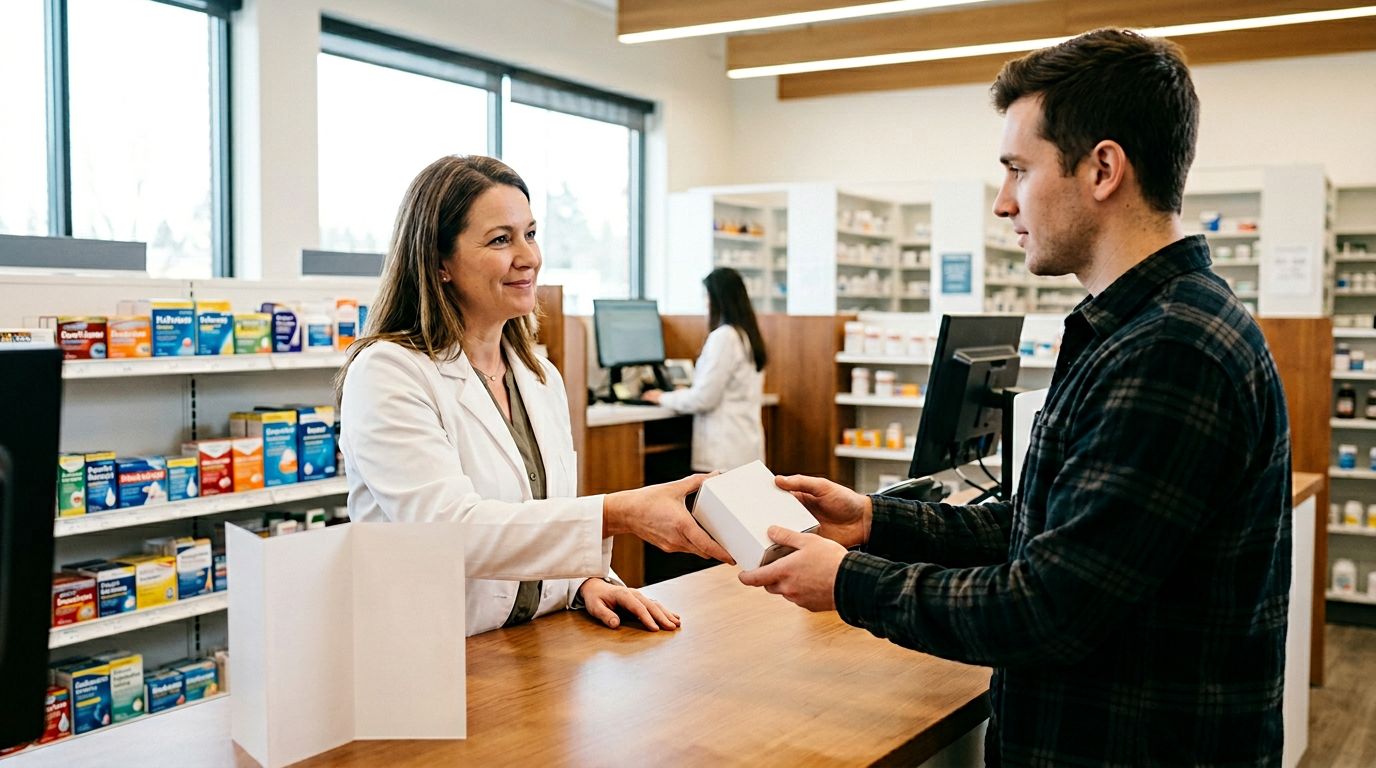
Indiana has a statewide standing order issued by the State Health Commissioner that allows any person to obtain naloxone from a pharmacy without a personal prescription. Here's how it works:
- Walk into any Indiana pharmacy — CVS, Walgreens, Walmart, Kroger, independent pharmacies
- Ask the pharmacist for naloxone or Narcan — you do not need a prescription. Simply reference the standing order.
- No questions asked: The pharmacist cannot require you to explain who the naloxone is for or why you need it
- Insurance may cover the cost: Most insurance plans (including Indiana Medicaid/HIP) cover naloxone with no copay. If uninsured, generic naloxone nasal spray typically costs $20–$40.
- Over-the-counter Narcan: As of 2023, Narcan nasal spray is also available over the counter (no pharmacist interaction needed) — look for it in the first aid aisle. OTC Narcan costs approximately $45 for a two-dose kit.
How to Administer Naloxone: Step-by-Step
Narcan nasal spray is designed to be used by anyone — no medical training required. The device delivers a pre-measured dose with a single press.
- Call 911 first. Tell the dispatcher: "Someone is not breathing and I suspect an opioid overdose. I am going to give naloxone." Give your location.
- Open the Narcan package. Peel back the packaging. Hold the device with your thumb on the bottom of the plunger and two fingers on the nozzle.
- Position the person. Lay them on their back. Tilt their head back gently and support the neck to open the airway.
- Insert the nozzle into one nostril until your fingers touch the bottom of their nose. It does not need to go deep.
- Press the plunger firmly with your thumb to release the entire dose into the nostril. Each device is single-use — the full dose is delivered in one press.
- Wait 2–3 minutes. Watch for signs of response: breathing resumes, color returns to lips, the person moves or makes sounds. If no response after 2–3 minutes, administer a second dose in the other nostril using a new device.
- Perform rescue breathing while waiting: tilt head back, lift chin, pinch nose, give one breath every 5 seconds until they are breathing on their own or EMS arrives.
- Place in the recovery position — roll them onto their side with their top knee bent forward. This prevents choking if they vomit. Stay with them until emergency services arrive.
The person may regain consciousness in acute opioid withdrawal — confused, agitated, nauseous, and potentially combative. This is normal. Explain calmly what happened: "You overdosed. I gave you Narcan. An ambulance is coming." Do not let them leave. Naloxone wears off in 30–90 minutes — if the opioid (especially fentanyl) is still in their system, they can go back into overdose after the naloxone wears off. This is why 911 and hospital monitoring are essential even if naloxone appears to work.
Training Opportunities for Hoosiers
While naloxone is designed to be used without training, formal training increases confidence and effectiveness:
- Overdose Lifeline: Offers free in-person and virtual naloxone training across Indiana. Sessions cover overdose recognition, naloxone administration, rescue breathing, and connecting survivors to treatment.
- Local health departments: Many counties host community training events, often combined with free naloxone distribution
- Treatment facilities: Many Indiana treatment centers train family members in naloxone use during family programming weekends
- First responder training: Indiana law enforcement, fire departments, and EMS agencies train all personnel in naloxone use. The Indiana State Police and many local departments now carry naloxone on every patrol vehicle.
- Schools and universities: Growing number of Indiana schools are training staff and stocking naloxone — particularly after the fentanyl-in-counterfeit-pills crisis reached campus environments
Connecting Overdose Survivors to Treatment
Surviving an overdose is a critical intervention point — research shows people are most receptive to treatment immediately after a near-death experience. If someone you know has survived an overdose, act quickly:
- Verify their insurance while they are in the emergency department — the hospital social worker can help
- Search for treatment near them — have a specific facility ready to offer when they are stabilized
- Ask the ER about warm handoff to treatment: Many Indiana hospitals now have addiction medicine consultants or peer recovery coaches who visit overdose patients in the ED
- Call SAMHSA: 1-800-662-4357 for immediate treatment referrals matched to their insurance, location, and needs
- Suggest medical detox as the first step — it provides safe, supervised withdrawal and bridges directly to ongoing treatment
- Offer to accompany them: "I will drive you there right now" removes one of the biggest barriers between crisis and treatment entry
Every naloxone save is a second chance at life. Make sure that second chance leads somewhere — browse Indiana treatment centers or call 1-800-662-4357 to find the right program before the next crisis.