Oxford House vs. Private Sober Living: Which Recovery Residence Model Fits You?
Indiana sober living costs $400–$800/month. Learn the difference between sober living and halfway houses, NARR certification levels, house rules, and how to find recovery residences.



The transition from residential treatment back to independent living is one of the most vulnerable periods in recovery. Sober living homes bridge that gap — providing a structured, substance-free living environment where residents practice recovery skills while gradually reintegrating into daily life.
Indiana has hundreds of sober living options, from democratic Oxford Houses to privately operated recovery residences. This guide covers what sober living is, how it differs from halfway houses, what it costs, what the rules are, and how to find the right fit.
Indiana sober living costs $400–$800/month (some income-adjusted). Average stay is 3–12 months. Indiana has DMHA-certified recovery residences that meet NARR quality standards.
What Is Sober Living?
Sober living homes (also called recovery residences) are shared housing environments for people in recovery from substance use disorder. They are not treatment facilities — they do not provide therapy or medical services. Instead, they provide:
- Substance-free environment: Zero-tolerance policy for drugs and alcohol on premises
- Peer community: Living with others in recovery who understand the challenges
- Structure and accountability: House rules, chores, curfews, and mandatory meeting attendance
- Drug testing: Regular random testing to maintain accountability
- Gradual independence: Residents are expected to work, attend school, or volunteer while building recovery skills
Sober Living vs. Halfway Houses: Key Differences
| Feature | Sober Living Home | Halfway House |
|---|---|---|
| Entry requirement | Voluntary — choose to live there | Often court-ordered or required by parole |
| Funding | Self-pay (rent from residents) | Government-funded or grant-funded |
| Length of stay | Flexible — 3 months to 1+ year | Fixed — typically 3–6 months |
| Governance | Self-governed (Oxford House) or operator-managed | Managed by agency staff |
| Treatment on-site | No — attend external treatment | Sometimes includes on-site programming |
Indiana Recovery Residence Standards and Certification
Indiana's Division of Mental Health and Addiction (DMHA) has established certification standards for recovery residences based on NARR (National Alliance for Recovery Residences) quality levels:
- Level 1 — Peer-Run: Democratically self-governed (Oxford House model). Minimal structure, maximum autonomy. Residents manage finances, rules, and member selection collectively.
- Level 2 — Monitored: House manager provides oversight. Some structure and rules. May receive Recovery Works vouchers for eligible residents.
- Level 3 — Supervised: Staff on-site during set hours. More structured environment with clinical support coordination. Appropriate for early recovery.
- Level 4 — Service Provider: Highest level of support. Staff on-site 24/7 with clinical services available. Functions as a step-down from residential treatment.
Recovery Works vouchers can fund placement in Level 2–4 certified residences for justice-involved individuals who lack insurance.
What to Expect in a Sober Living Home
Daily life in sober living is designed to build the habits and accountability that sustain long-term recovery:
- House rules: No drugs or alcohol, attend house meetings (weekly), complete assigned chores, respect quiet hours, pay rent on time
- Drug testing: Random urine screens — typically 1–2 per week. Positive tests result in immediate discharge at most homes.
- Meeting attendance: Most homes require attending 3–5 recovery meetings per week (AA, NA, SMART Recovery, Celebrate Recovery)
- Curfew: Weeknight curfews (typically 10–11 PM) are common, especially in the first 30 days
- Employment/education: Residents are expected to be working, in school, or actively job-searching within 30 days
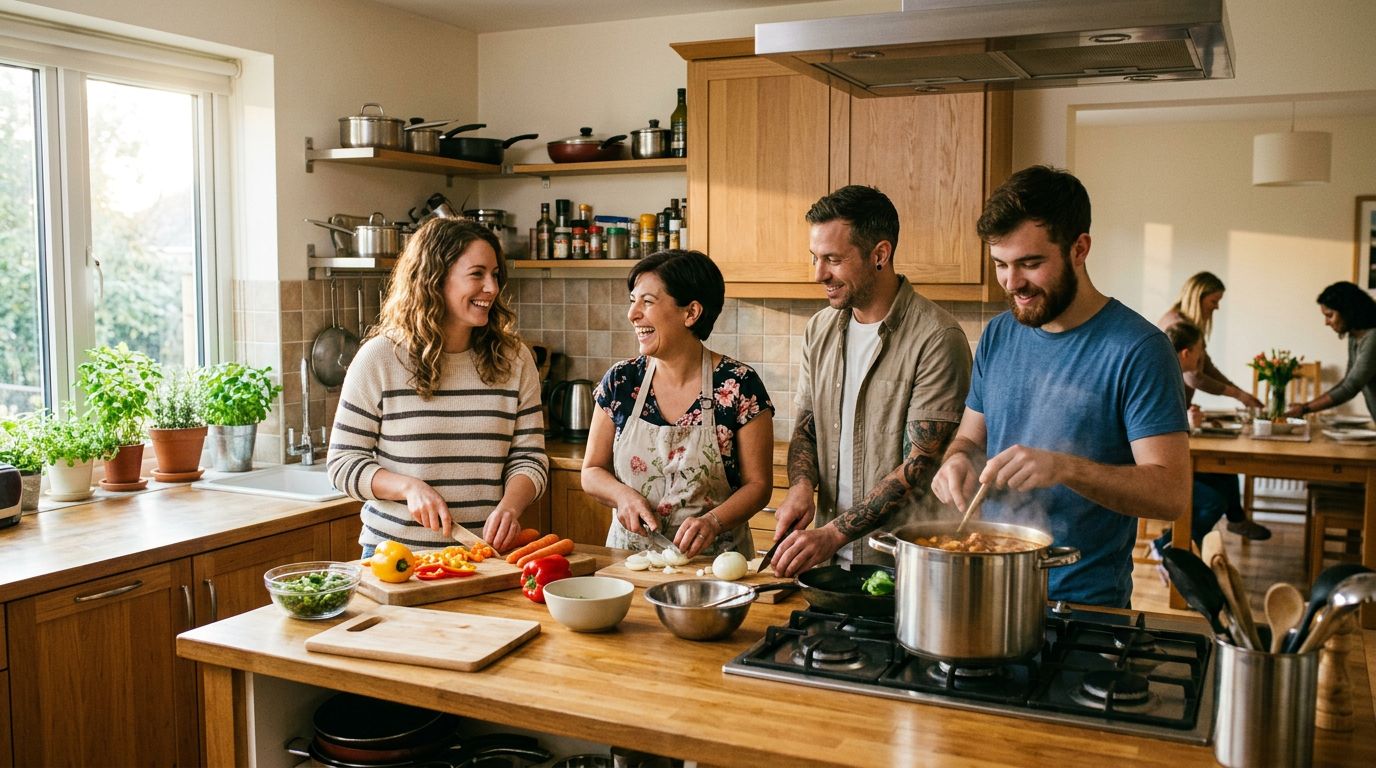
- Community responsibilities: Cooking meals, cleaning common areas, participating in house governance
How Much Does Sober Living Cost in Indiana?
Sober living in Indiana is remarkably affordable compared to other states:
- Oxford Houses: $80–$120/week ($320–$480/month). Costs are split equally among residents. No profit motive.
- Private recovery residences: $400–$800/month depending on location, amenities, and level of support
- Premium sober living: $1,000–$2,000/month for private rooms, fitness amenities, and enhanced programming
Most sober living homes do not accept insurance (they are housing, not treatment). However, some costs may be offset by:
- Recovery Works vouchers for Level 2–4 certified homes
- State or local housing assistance programs
- Veteran housing benefits (HUD-VASH)
For information on treatment costs, see our complete Indiana rehab cost guide.
How Long Should You Stay?
Research consistently shows that longer stays produce better outcomes. The general recommendations:
- Minimum 90 days: The baseline for building stable recovery habits
- 6 months: Recommended for those with a history of relapse
- 12+ months: Ideal for individuals transitioning from long-term residential treatment or with limited support networks
The Oxford House model has no maximum length of stay — residents can live there as long as they follow the rules and pay their share. This open-ended approach has shown some of the best long-term outcomes in recovery housing research.
Finding Sober Living in Indiana
Indiana has sober living options across the state, concentrated in urban areas with the most recovery infrastructure:
- Search our Indiana facility directory — filter for sober living and recovery residences
- Indianapolis — the largest concentration of recovery residences in the state, including dozens of Oxford Houses
- Fort Wayne and Evansville — growing sober living networks
- Check your insurance — while sober living is typically self-pay, your insurance may cover concurrent outpatient treatment
Sober living isn't treatment — it's the bridge between treatment and full independence. For many people, it's the environment that makes lasting recovery possible.