VA Benefits for Addiction Recovery: A Guide for Indiana Veterans
Indiana has 380,000+ veterans. VA benefits for SUD treatment, Community Care, Vet Centers, PTSD-SUD programs, and Indiana-specific veteran resources explained.



Indiana is home to more than 380,000 veterans — the 15th largest veteran population in the nation. Many of these men and women carry invisible wounds from their service: combat-related PTSD, traumatic brain injuries, military sexual trauma, and the grinding stress of transitioning from military to civilian life. These experiences place veterans at significantly higher risk for substance use disorder than the general population.
The good news is that veterans have access to some of the most comprehensive addiction treatment benefits in the American healthcare system. Between VA healthcare, Community Care, Vet Centers, and Indiana-specific resources, no veteran should have to fight addiction without support. This guide walks through every pathway to treatment available to Indiana's veterans — from navigating VA enrollment to finding veteran-friendly treatment centers in your community.
If you are a veteran in crisis or having thoughts of suicide, dial 988 then press 1, or text 838255. This service is free, confidential, and available 24/7. You do not need to be enrolled in VA healthcare to use it.
Understanding Veteran Addiction: Unique Risk Factors
Veterans face addiction risk factors that civilians rarely encounter. According to the VA, approximately 11% of veterans visiting VA primary care screen positive for problematic substance use, and rates are significantly higher among combat veterans and those with co-occurring mental health conditions.
| Risk Factor | Impact on Addiction Risk | Indiana Context |
|---|---|---|
| Combat PTSD | 1 in 3 veterans with SUD also has PTSD; self-medication drives use | Indiana deployed thousands to Iraq/Afghanistan from Camp Atterbury and Grissom ARB |
| Military Sexual Trauma | ~25% of women, ~1% of men; survivors 26x more likely to use drugs | VA MST coordinators available at Indianapolis and Fort Wayne VAMCs |
| Chronic Pain | Service-connected injuries → opioid prescriptions → dependence pathway | Indiana VA has transitioned to multimodal pain management to reduce opioid reliance |
| Traumatic Brain Injury | Blast injuries increase impulsivity and reduce executive function | VA Polytrauma System serves TBI patients at Indianapolis VAMC |
| Transition Stress | Loss of structure, identity, purpose, and brotherhood | Indiana National Guard has dedicated transition assistance programs |
| Military Culture | Heavy drinking normalized; help-seeking stigmatized as weakness | Peer support programs using veteran recovery coaches address cultural barriers |
The veteran suicide rate is 1.5 times the civilian rate, and substance use is a significant contributing factor. Getting treatment is not just about sobriety — it can be life-saving. For more on the trauma-addiction connection, see our PTSD and Substance Abuse guide.
VA Healthcare for Substance Use Disorders
The VA provides a comprehensive continuum of addiction treatment for enrolled veterans, typically at no cost for service-connected conditions and low cost for other conditions. VA SUD treatment programs include:
- Outpatient SUD counseling: Individual therapy, group therapy, and psychoeducation at VA Medical Centers and Community-Based Outpatient Clinics (CBOCs)
- Intensive Outpatient Programs (IOP): Structured 9+ hours/week programming compatible with work and family
- Residential rehabilitation: Specialized Substance Abuse Residential Rehabilitation Treatment Programs (SARRTPs) providing 30–90 day immersive care
- Domiciliary care: Longer-term residential programs for veterans who are homeless or have unstable housing
- Medication-Assisted Treatment (MAT): Buprenorphine (Suboxone), naltrexone (Vivitrol), acamprosate, and methadone (through VA Opioid Treatment Programs)
- PTSD-SUD integrated treatment: Programs like Seeking Safety and concurrent PTSD/SUD therapy that address both conditions simultaneously
- Peer support specialists: Veterans with lived recovery experience providing mentorship, accountability, and navigation
Indiana VA facilities offering SUD treatment:
- Richard L. Roudebush VA Medical Center — Indianapolis (comprehensive SUD program with residential and outpatient)
- VA Northern Indiana Health Care System — Fort Wayne and Marion campuses
- CBOCs in Evansville, Terre Haute, Bloomington, Muncie, and other cities
VA Community Care Network in Indiana
If VA treatment is unavailable, impractical, or has long wait times, the VA Community Care program (formerly known as the MISSION Act) allows veterans to receive treatment at approved community providers — with the VA covering the cost.
You may be eligible for Community Care if:
- The nearest VA facility does not offer the SUD service you need
- You reside in a state without a full-service VA medical facility (not applicable to Indiana, but relevant for travel)
- The VA cannot schedule an appointment within 20 business days (outpatient) or 28 calendar days (specialty care)
- Your average drive time to the nearest VA is more than 30 minutes
- It is in your best medical interest as determined by your VA provider
Community Care is particularly valuable for Indiana veterans in rural areas far from Indianapolis or Fort Wayne VA facilities. Browse Indiana treatment centers that participate in VA Community Care networks.
Vet Centers and Readjustment Counseling
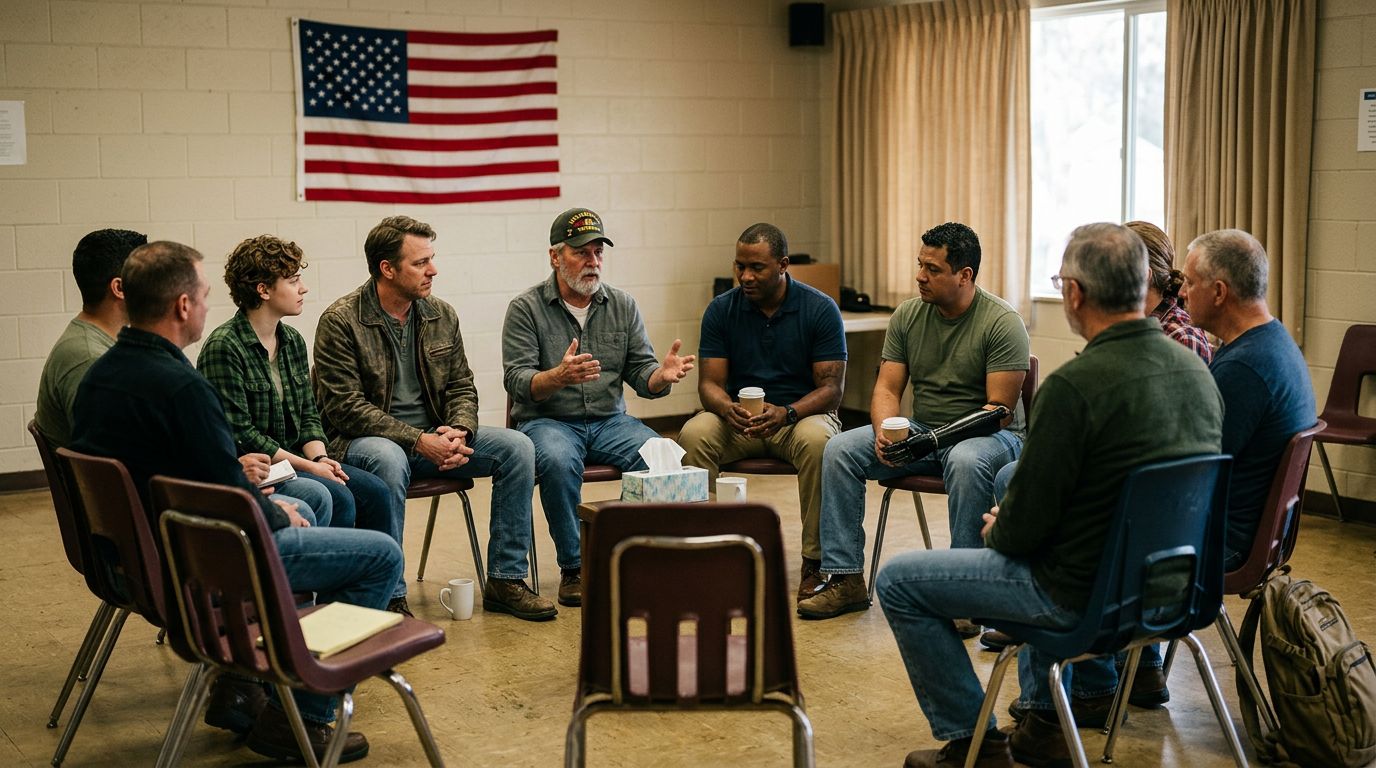
Vet Centers are one of the most underutilized veteran resources. They provide free readjustment counseling in community-based settings with no VA enrollment required. This is critical for veterans who haven't enrolled in VA healthcare or who prefer a more informal, non-institutional setting.
Indiana Vet Center locations:
- Indianapolis Vet Center — 8330 Naab Road, Suite 103
- Fort Wayne Vet Center — 5825 Coventry Lane
- Evansville Vet Center — 311 N. Weinbach Avenue
- Gary Area Vet Center — 6505 Broadway
- Bloomington Vet Center — satellite location
Vet Center services include:
- Individual and group counseling for PTSD and substance use
- Military Sexual Trauma (MST) counseling
- Family counseling for veteran families
- Bereavement counseling for families of service members killed in action
- Employment and benefits referrals
- Referral to VA or community treatment programs
Walk-ins are welcome at most Vet Centers. Call ahead to confirm hours: 1-877-WAR-VETS (1-877-927-8387).
Specialized Treatment Programs for Veterans
Several treatment approaches have been specifically adapted or developed for veteran populations:
- EMDR (Eye Movement Desensitization and Reprocessing): Endorsed by the VA for combat PTSD. Helps reprocess traumatic memories that drive substance use. Available at VA and many community providers.
- Cognitive Processing Therapy (CPT): 12-session structured therapy for PTSD — the VA's most widely used trauma treatment
- Seeking Safety: An integrated treatment specifically designed for co-occurring PTSD and substance use disorder
- Trauma-informed residential programs: Community facilities with military-competent staff trained in combat PTSD, MST, and TBI
- Peer recovery support: Veteran peer specialists who understand military culture and the unique challenges of veteran recovery
Indiana-Specific Veteran Resources
| Resource | What They Provide | Contact |
|---|---|---|
| Indiana Dept. of Veterans Affairs | Benefits navigation, claims assistance, state veteran programs | 317-232-3910 |
| Veterans Crisis Line | 24/7 crisis support for veterans and families | 988, press 1 / text 838255 |
| VA National Center for PTSD | Self-help tools, treatment locator, educational resources | ptsd.va.gov |
| Vet Centers (IN) | Free counseling — no VA enrollment needed | 1-877-WAR-VETS |
| VA Health Enrollment | Enroll in VA healthcare benefits | 1-877-222-8387 |
How to Get Started: Step by Step
- If in crisis: Call 988 (press 1) or text 838255 — the Veterans Crisis Line connects you with VA responders immediately.
- If not enrolled in VA: Call 1-877-222-8387 or visit va.gov/health-care/apply to start the enrollment process.
- If enrolled: Contact your local VA Mental Health clinic or ask your primary care provider for a SUD referral.
- If VA is too far or has wait times: Ask about Community Care eligibility — the VA may authorize treatment at a community provider near you.
- If you prefer non-VA care: Visit an Indiana Vet Center (no enrollment needed) or browse veteran-friendly treatment centers in our directory.
- If you also have private insurance: Verify your coverage — you may have additional treatment options beyond VA benefits.
Reaching Out for Help: You've Already Served
Military culture teaches self-reliance and toughness. But addiction is a medical condition — not a character flaw or a sign of weakness. Seeking treatment requires the same courage that carried you through basic training, deployment, and the challenges of military life.
You served your country. Now let your country serve you. The benefits exist. The programs are there. The peers who've walked this path before you are waiting to help. Find veteran-specific treatment in Indiana, call the Veterans Crisis Line (988, press 1), or reach out to SAMHSA at 1-800-662-4357.
Recovery is not just possible for veterans — it happens every day across Indiana. Your next mission starts now.