Why Gender-Specific Treatment Matters: A Guide for Women Facing Addiction
Women face unique addiction barriers: childcare, pregnancy, trauma, stigma. Learn why gender-specific treatment matters and find women's programs in Indiana.


Women experience addiction differently than men — biologically, psychologically, and socially. The path to addiction is often faster (a phenomenon called "telescoping"), the barriers to treatment are steeper, and the stigma is heavier. Yet most treatment programs in America were designed by men, for men, based on research conducted primarily on male subjects.
Gender-specific treatment programs exist because they work better. Research consistently shows that women in women-only treatment programs have higher completion rates, better therapeutic outcomes, and stronger long-term recovery. This guide explores why gender matters in addiction treatment, the unique challenges women face, and how to find specialized programs across Indiana.
Women develop addiction faster (telescoping effect), experience more severe health consequences sooner, report trauma histories at rates of up to 70%, and face unique barriers including childcare, pregnancy, domestic violence, and fear of losing custody — the #1 reason women delay seeking treatment.
Source: SAMHSA Women and Substance Use; ACOG Committee Opinion
Why Gender-Specific Treatment Matters
The evidence base for gender-specific treatment is substantial. According to SAMHSA's women's health resources, women in gender-specific programs demonstrate:
- Higher treatment completion rates compared to mixed-gender programs
- Greater improvement in mental health outcomes — particularly depression and PTSD
- More willingness to discuss trauma — sexual abuse, domestic violence, and body image issues are addressed more openly in women-only groups
- Stronger therapeutic alliance — women report feeling safer and more understood
- Better parenting outcomes — programs that include children show improved child welfare metrics
Mixed-gender treatment is not inherently bad, but it introduces dynamics that can be counterproductive for women in early recovery: power imbalances, romantic distraction, discomfort discussing trauma in front of men, and the tendency for women to defer to male voices in group settings.
Unique Challenges Women Face in Addiction
Understanding why women's addiction experience is different requires examining both biology and social context:
| Factor | How It Affects Women |
|---|---|
| Telescoping effect | Women progress from first use to addiction and health consequences faster than men — often by years. This means women may present for treatment with more severe medical issues despite a shorter use history. |
| Hormonal influences | Estrogen and progesterone cycles influence craving intensity and relapse vulnerability. Research shows women experience stronger cravings during the follicular phase of the menstrual cycle. |
| Trauma history | Up to 70% of women in addiction treatment report histories of sexual or physical abuse. Trauma is the primary driver of substance use for many women — self-medication for PTSD, anxiety, and emotional pain. |
| Childcare barriers | Women are disproportionately primary caregivers. Finding childcare for 30–90 days of residential treatment is an enormous practical barrier. Fear of losing custody through DCS involvement is the #1 reason women delay treatment. |
| Financial dependence | Many women are financially dependent on a partner who may also use substances, making leaving the relationship (and entering treatment) economically threatening. |
| Stigma | Society judges addicted mothers far more harshly than addicted fathers. The shame of being seen as a "bad mother" prevents many women from seeking help until crisis forces the issue. |
Trauma and Addiction in Women
The intersection of trauma and substance use is particularly pronounced in women. Trauma-informed care is not optional in women's treatment — it is foundational:
- Sexual assault survivors are 13 times more likely to abuse alcohol and 26 times more likely to use drugs than non-victims
- Domestic violence and substance use frequently co-occur — in many cases, leaving the abuser requires entering treatment, and entering treatment requires leaving the abuser. Coordinated DV and SUD services are essential.
- Complex PTSD from ongoing abuse creates more severe symptoms than single-incident trauma, requiring longer and more specialized treatment
- EMDR and Seeking Safety are evidence-based therapies specifically effective for co-occurring trauma and addiction in women
Indiana domestic violence hotline: 1-800-332-7385 (24/7, confidential)
Treatment Options During Pregnancy
Pregnant women with substance use disorder face unique medical considerations that require specialized care. The American College of Obstetricians and Gynecologists (ACOG) recommends:
- Medication-Assisted Treatment is the standard of care: Buprenorphine (Suboxone) is the preferred treatment for opioid use disorder during pregnancy. It reduces neonatal abstinence syndrome (NAS) severity compared to methadone and is considered safe for both mother and fetus.
- Abrupt detox is medically dangerous: Sudden opioid withdrawal during pregnancy can cause fetal distress, miscarriage, premature labor, and fetal death. Medical management — not abrupt cessation — is the standard.
- SAMHSA priority admission: Pregnant women with SUD receive priority admission at all federally funded treatment facilities. If you are pregnant and need treatment, say so — you will be moved to the front of any waitlist.
- Coordinated OB care: Treatment programs that specialize in pregnant patients coordinate with OB/GYN providers for prenatal care during treatment.
Seeking treatment voluntarily during pregnancy is not grounds for losing custody in Indiana. In fact, DCS and family courts view voluntary treatment engagement as a positive factor. Not seeking treatment when it is clearly needed poses a greater custody risk than entering a program.
Childcare and Parenting Programs in Indiana
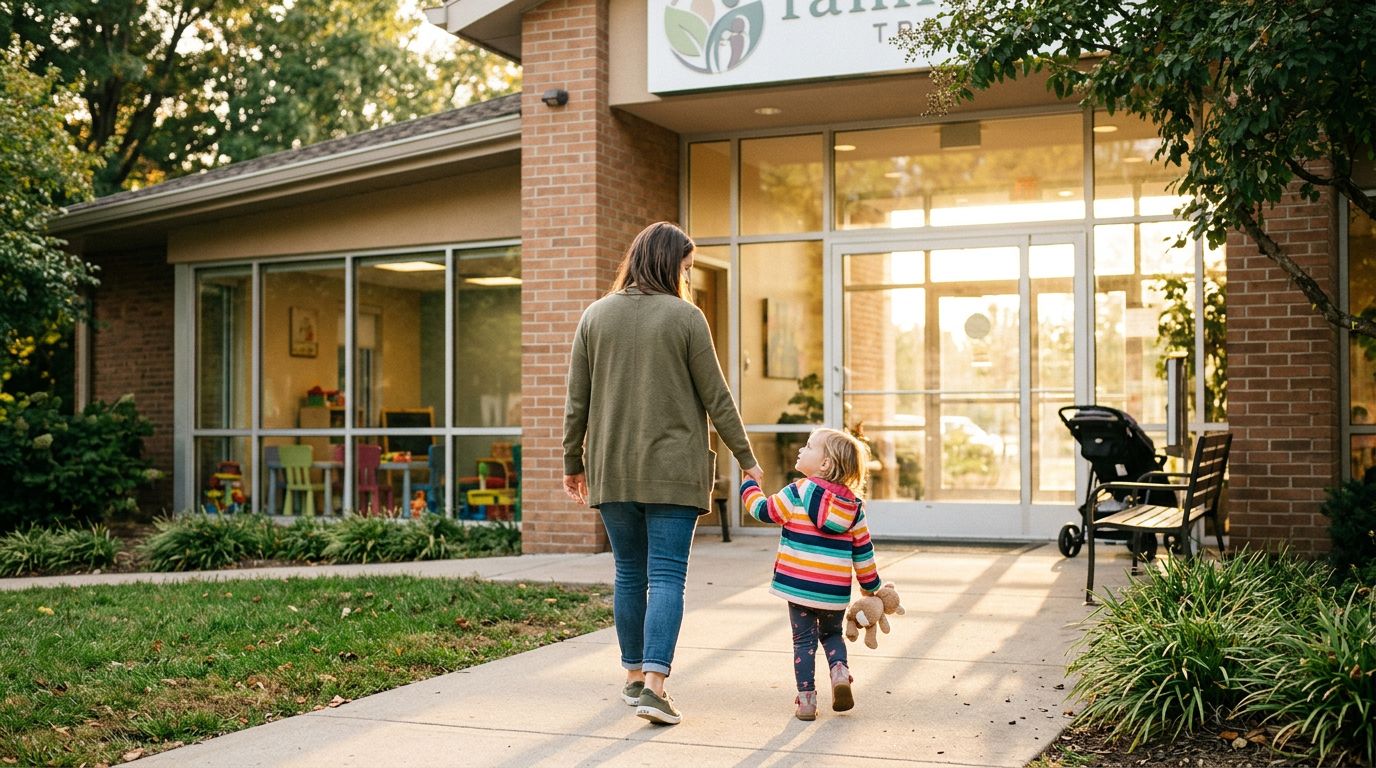
The childcare barrier is real — but Indiana has programs designed to address it:
- Residential programs that allow children: Some Indiana treatment centers allow mothers to bring children (typically under age 12) into residential treatment. Children participate in age-appropriate activities while mothers attend programming.
- Parenting skills classes: Evidence-based curricula like Strengthening Families address the impact of addiction on parent-child relationships
- WIC coordination: Women, Infants, and Children nutritional support is coordinated with treatment for pregnant and postpartum women
- Family reunification planning: For mothers with children in foster care, treatment programs work with Indiana DCS on reunification timelines and requirements
- Childcare assistance: Some outpatient and IOP programs offer on-site childcare or childcare stipends during treatment hours
Co-Occurring Conditions Common in Women
Women in addiction treatment frequently present with co-occurring conditions that require integrated care:
- Depression: Major depressive disorder co-occurs with SUD at higher rates in women than men
- Anxiety disorders: Generalized anxiety, social anxiety, and panic disorder often drive self-medication
- Eating disorders: Anorexia, bulimia, and binge eating disorder co-occur with substance use at much higher rates in women — shared neurobiological pathways and body image distress
- PTSD: From sexual assault, domestic violence, childhood abuse, or military sexual trauma
- Perinatal mood disorders: Postpartum depression and anxiety can trigger or worsen substance use
Dual diagnosis programs that address these co-occurring conditions alongside addiction produce significantly better outcomes than treating conditions separately.
Finding Women's Treatment Programs in Indiana
- Browse women's treatment programs — Indiana facilities offering gender-specific care
- Pregnancy-specific programs — facilities equipped for prenatal care during treatment
- DV-informed treatment — programs addressing domestic violence alongside addiction
- Eating disorder treatment — integrated programs for co-occurring SUD and eating disorders
- Verify your insurance — gender-specific treatment is fully covered under parity law
- SAMHSA Helpline: 1-800-662-4357 — ask specifically for women's treatment referrals
Taking the First Step
If you are a woman struggling with addiction, you are not alone. According to the Office on Women's Health, nearly 15.5 million women in the U.S. had a substance use disorder in the past year. Recovery is not just possible — it is happening every day for women across Indiana.
Seeking help is not weakness. It is not failure. It is the strongest thing you can do — for yourself, for your children, and for your future. Take our confidential assessment, call 1-800-662-4357, or browse treatment centers to find your path forward.