
Rehabs for Circadian Rhythm Sleep–Wake Disorders

Showing 4 of 4 Results (filtered)
Featured Rehab Centers



Indiana Center for Recovery - Alcohol & Drug Rehab Center Bedford
Bedford, Indiana
1600 23rd St, Bedford, IN 47421

First City Recovery Center
Kokomo, Indiana
317 W Jefferson St, Kokomo, IN, 46901
Pinnacle Treatment Centers - 2209 John R Wooden Drive
Martinsville, Indiana
2209 John R Wooden Drive, 3rd Floor Martinsville, IN 46151
Get Personalized Rehab Matches in 60 Seconds
Tell us a few details and we’ll show a personalized shortlist of verified Indiana rehabs, making it simple to compare options and choose your next step with confidence.
Centerstone – Pierson House
Richmond, Indiana
76 S 14th St, Richmond, IN 47374
Why Trust Indiana Rehabs
As Hoosiers helping Hoosiers, we understand the unique challenges our communities face. Our team meticulously verifies every Indiana treatment center, ensuring you find trusted, local care that truly understands your journey.
About our listingsLevels of Care
Explore popular treatment options by levels of care, from flexible treatment in Outpatient centers to intensive care in Residential rehabs.
Free · 24/7 · Confidential
Talk to a Treatment Specialist
Call now to get matched with Indiana facilities that accept your insurance.
(888) 568-9930
Free
Ins. check
4.9★
Rating
HIPAA
Protected
Can't travel to a facility?
Licensed Indiana therapists via secure video — same-week appointments, evenings & weekends available.
Ever feel like your body is running on a completely different time zone than everyone around you, no matter how hard you try to catch up? That sensation of being out of sync, wide awake when the world is sleeping or fighting to keep your eyes open at all the wrong moments, can leave you feeling isolated and frustrated. It’s not just in your head, when your internal body clock gets thrown off, circadian rhythm disorders are often to blame. The good news is that with the right understanding and approach, you can find real solutions to help your body and mind rediscover their natural flow.
What Are Circadian Rhythm Sleep Disorders?
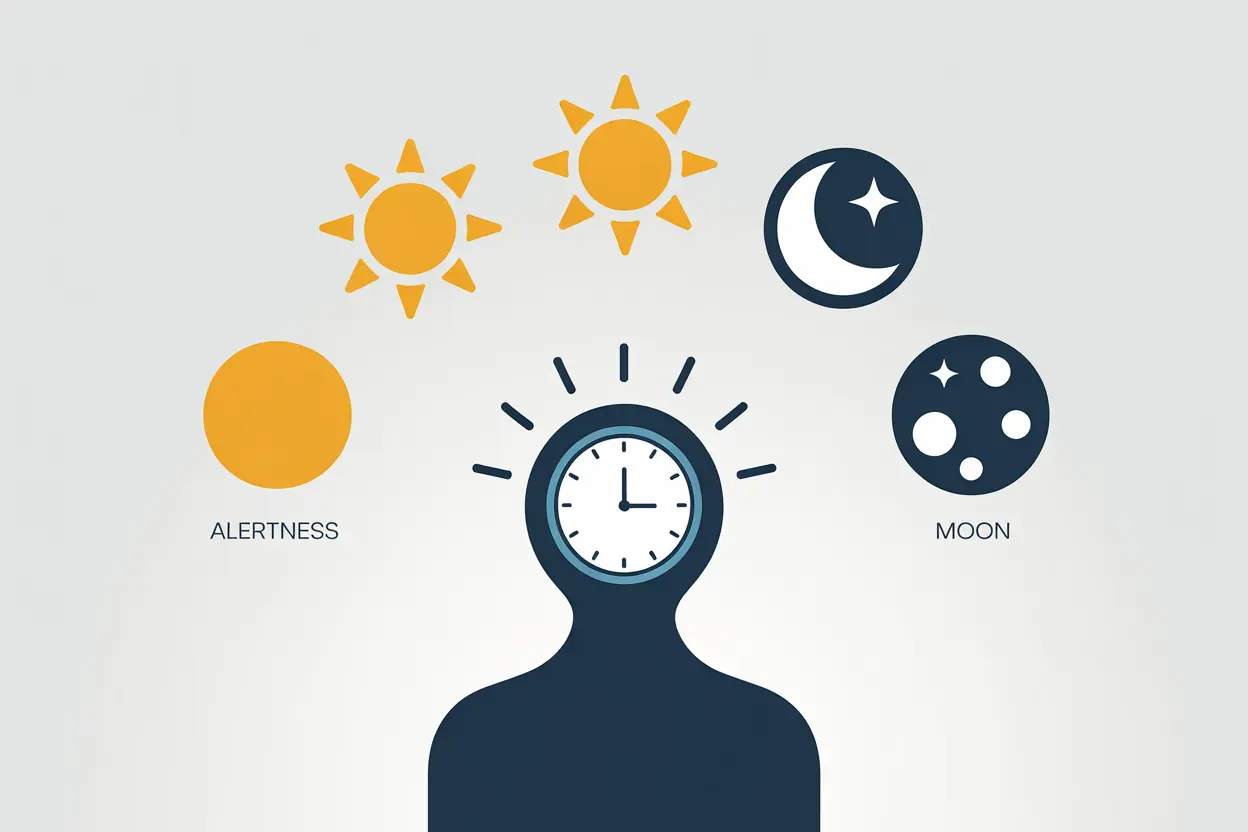
Think of your body as having its own internal clock. This "master clock," located in a part of your brain called the suprachiasmatic nucleus (SCN), runs on a roughly 24-hour cycle. It directs all sorts of essential functions, from when you feel hungry to when your body temperature rises and falls. Most importantly, it governs your sleep-wake cycle, telling you when it's time to power down for the night and when to feel alert during the day.
A circadian rhythm sleep disorder (CRSD) happens when this internal clock gets out of sync with the world around you[1]. Your body might be telling you it’s bedtime at 3 a.m., even though you have to be up for work at 7 a.m. This misalignment can be caused by intrinsic factors, meaning something is off with the clock itself, or by extrinsic factors, like your work schedule or lifestyle choices.
If this sounds familiar, you're not alone. Experts estimate that these disorders affect about 3% of people worldwide[2]. The symptoms often go beyond simple tiredness. You might experience:
- Persistent trouble falling asleep at a conventional time.
- Waking up far too early and being unable to get back to sleep.
- Feeling like your sleep isn't refreshing, no matter how many hours you get.
- Excessive daytime sleepiness that interferes with work, school, or daily life.
- Symptoms of insomnia or chronic fatigue.
Living with a CRSD can feel like a constant battle against your own body. But understanding that there's a biological reason for your struggles is the first step toward finding effective circadian rhythm sleep disorder treatment.
Types of circadian rhythm disorders
Circadian rhythm disorders aren't a one-size-fits-all condition. They are categorized based on the specific pattern of your sleep-wake cycle misalignment. Pinpointing the type of disorder you have is a crucial step for your healthcare provider to create a treatment plan that works for you. Here are some of the most common types.
Delayed Sleep Phase Disorder
Often called a "night owl" tendency, Delayed Sleep-Wake Phase Disorder (DSWPD) is when your sleep pattern is shifted two or more hours later than what’s considered conventional. You might not feel tired until the early morning hours (like 2 a.m. or later) and, if left to your own devices, would naturally wake up late in the morning or early afternoon. This pattern is especially common in adolescents and young adults, with some studies showing up to 4.6% of them may have the disorder.
Advanced Sleep Phase Disorder
On the opposite end of the spectrum is Advanced Sleep-Wake Phase Disorder (ASWPD), often seen in "morning larks." People with this disorder find themselves getting sleepy very early in the evening (for example, between 6 p.m. and 9 p.m.) and waking up in the very early morning hours, often well before sunrise. While it can affect anyone, older adults, especially those over 60, are more likely to experience this type of sleep-wake rhythm[3].
Irregular Sleep-Wake Rhythm
This disorder is characterized by a complete lack of a consistent sleep-wake cycle. Instead of one long period of sleep at night, a person's sleep is fragmented into multiple short naps spread throughout the day and night. There's no clear rhythm, making it difficult to maintain a normal daily routine. Irregular sleep-wake rhythm is often associated with neurodegenerative conditions like Alzheimer's disease or dementia, as well as brain injuries that affect the brain's timekeeping center.
Free-Running Disorder (Nonentrained Type)
Also known as Non-24-Hour Sleep-Wake Disorder, this is a condition where the body's internal clock is not synchronized to the 24-hour day. Instead, it "free-runs" on its own cycle, which is often slightly longer than 24 hours. This causes sleep and wake times to drift progressively later each day. This disorder is most common in individuals who are totally blind, as their brains do not receive the light cues necessary to reset the internal clock. It is estimated that approximately 50% of blind persons have non-entrained circadian rhythms[4]. Other, less common types include Shift Work Disorder and Jet Lag Disorder, which are caused by external factors.

How are circadian rhythm disorders treated?
Finding the right circadian rhythm sleep disorder treatment starts with a proper diagnosis. A healthcare provider will likely begin by discussing your medical history and sleep patterns in detail. To get a clear picture, they may ask you to keep a sleep diary for a few weeks, logging when you go to sleep, wake up, and how you feel throughout the day. They might also use a method called actigraphy, where you wear a small, wrist-watch-like device that tracks your rest and activity cycles over a longer period[5]. Once a diagnosis is confirmed, the main goal of treatment is to realign your internal clock with your desired schedule and the external environment. This is often achieved through a combination of approaches tailored to your specific needs.
Healthy lifestyle changes
These foundational habits are often the first line of defense and can make a significant difference in managing your sleep-wake cycle. A provider may recommend:
- Maintaining a consistent schedule: Sticking to a regular sleep-wake schedule, even on weekends, is one of the most powerful ways to stabilize your internal rhythm.
- Practicing good sleep hygiene: This involves creating a sleep-friendly environment. Keep your bedroom dark, quiet, and cool. Establish a relaxing bedtime routine to signal to your body that it's time to wind down, such as reading a book or taking a warm bath.
- Timing your meals and exercise: Eating meals at regular times and avoiding heavy meals close to bedtime can support your circadian clock. Regular physical activity is also beneficial, but try to avoid intense workouts too close to your bedtime.
- Avoiding certain substances: Steer clear of stimulants like caffeine and nicotine, especially in the afternoon and evening. While alcohol might make you feel sleepy initially, it can disrupt your sleep later in the night.
Light therapy
Timed exposure to bright light is a cornerstone of treatment for many circadian rhythm disorders[6]. Light is the most powerful signal for resetting your body's internal clock. A special light box, which is much brighter than normal indoor lighting, is used for a specific amount of time at a specific time of day. The timing is critical: for someone with Delayed Sleep Phase Disorder (a "night owl"), exposure to bright light in the morning can help advance their body clock, making it easier to fall asleep earlier. For someone with Advanced Sleep Phase Disorder (a "morning lark"), evening light exposure can help delay the clock, allowing them to stay awake later and sleep in a bit longer.
Medications
When lifestyle changes and light therapy aren't enough, a doctor may recommend certain medications. The most common is melatonin, a hormone your body naturally produces to regulate sleep. It's important to understand that melatonin isn't a typical sleeping pill; it's a chronobiotic, meaning it helps shift the timing of your internal clock. Because the timing of the dose is everything, it's essential to use melatonin under the guidance of a doctor. Other prescription medications, such as melatonin agonists or wake-promoting agents, may also be considered in specific situations. Additionally, therapies like cognitive behavioral therapy for insomnia (CBT-I) can be adapted to help you develop healthy sleep behaviors and reframe negative thoughts about sleep.
Managing Your Condition and Finding Help in Indiana
Living with an untreated circadian rhythm disorder can lead to more than just daytime sleepiness. The complications can be serious, impacting your overall health and well-being. Chronic sleep disruption is linked to impaired work or school performance, an increased risk of accidents, and a higher likelihood of developing mood disorders like depression and anxiety[7]. While intrinsic disorders can't always be prevented, those caused by external factors like shift work or jet lag can be managed with proactive strategies.
Taking care of yourself is about consistency. Adhering to your treatment plan, whether it involves a strict sleep schedule, daily light therapy, or medication, is the key to managing your condition effectively. It's a process that requires patience and commitment, but realigning your body's natural rhythm is achievable.
Because treatment is highly personalized, getting professional guidance is essential. A sleep medicine specialist or a qualified healthcare provider can help you find the right combination of therapies for your specific needs. If you're in Indiana and ready to take the next step, there are resources available to help you. The Indiana Division of Mental Health and Addiction (DMHA) provides information on certified providers across the state. For a more direct way to connect with care, you can use our directory to find local treatment facilities in Indiana that are equipped to help you manage your sleep and improve your quality of life.
It's important to remember that you don't have to navigate this journey alone. Reclaiming your natural sleep-wake cycle is possible, and it starts with reaching out for the right support. The team at Indiana Rehabs is here to help you understand your options and connect with compassionate, professional care. If you're ready to find a path toward better sleep and a more balanced life, call us today at (888) 568-9930 or explore our resources to get in touch with a treatment provider who can help. Taking that first step is a powerful move toward feeling rested, healthy, and back in sync with your life.
Frequently Asked Questions About Circadian Rhythm Sleep Disorder Treatment
Can a circadian rhythm disorder go away on its own?
Is a circadian rhythm disorder a mental illness?
How long does it take to fix your circadian rhythm?
What is the best treatment for circadian rhythm sleep disorder?
- Fishe, J. N., et al. (2021). Circadian Rhythm Sleep–Wake Disorders: a Contemporary Review of Neurobiology, Treatment, and Future Directions. Current Psychiatry Reports. pmc.ncbi.nlm.nih.gov
- Czeisler, C. A., et al. (2021). Workshop report. Circadian rhythm sleep–wake disorders: Gaps and opportunities. Sleep. academic.oup.com
- Ptáček, L. J. (2023). Circadian Rhythm Sleep-Wake Disorders. Continuum (Minneapolis, Minn.). continuum.aan.com
- Auger, R. R., et al. (2015). Clinical Practice Guideline for the Treatment of Intrinsic Circadian Rhythm Sleep-Wake Disorders. Journal of Clinical Sleep Medicine. aasm.org
- Morgenthaler, T. I., et al. (2007). Practice Parameters for the Clinical Evaluation and Treatment of Circadian Rhythm Sleep Disorders. Sleep. aasm.org
- Cain, S. W., et al. (2024). Integrating Assessment of Circadian Rhythmicity to Improve Treatment of Depression and Sleep. Schizophrenia Bulletin. pmc.ncbi.nlm.nih.gov
- National Sleep Foundation. (n.d.). Impact of Sleep and Circadian Problems. SleepHealth.org. sleephealth.org