Indiana Good Samaritan Law: Protections When Calling 911 for an Overdose
Indiana's overdose immunity law (IC 16-47-11.5) provides criminal immunity when you call 911 for an overdose — but the protections have limits. What's covered, what's not, how the Lifeline Law works for minors, and why calling always beats not calling.



Every year in Indiana, people watch friends overdose and hesitate to call 911 — not because they don't care, but because they're afraid of getting arrested. They have drugs on them. There's paraphernalia in the room. There might be a warrant. The fear of criminal consequences becomes more powerful than the impulse to save a life.
Indiana's Good Samaritan Law — formally codified in IC 16-47-11.5 — exists specifically to remove this barrier. It provides criminal immunity for certain drug-related offenses when you call 911 for someone experiencing an overdose. But the protections have important limits that most people don't understand.
With Indiana recording 3,847 opioid overdose deaths in 2024 (per the State of Addiction Report), understanding this law could mean the difference between someone living and dying.
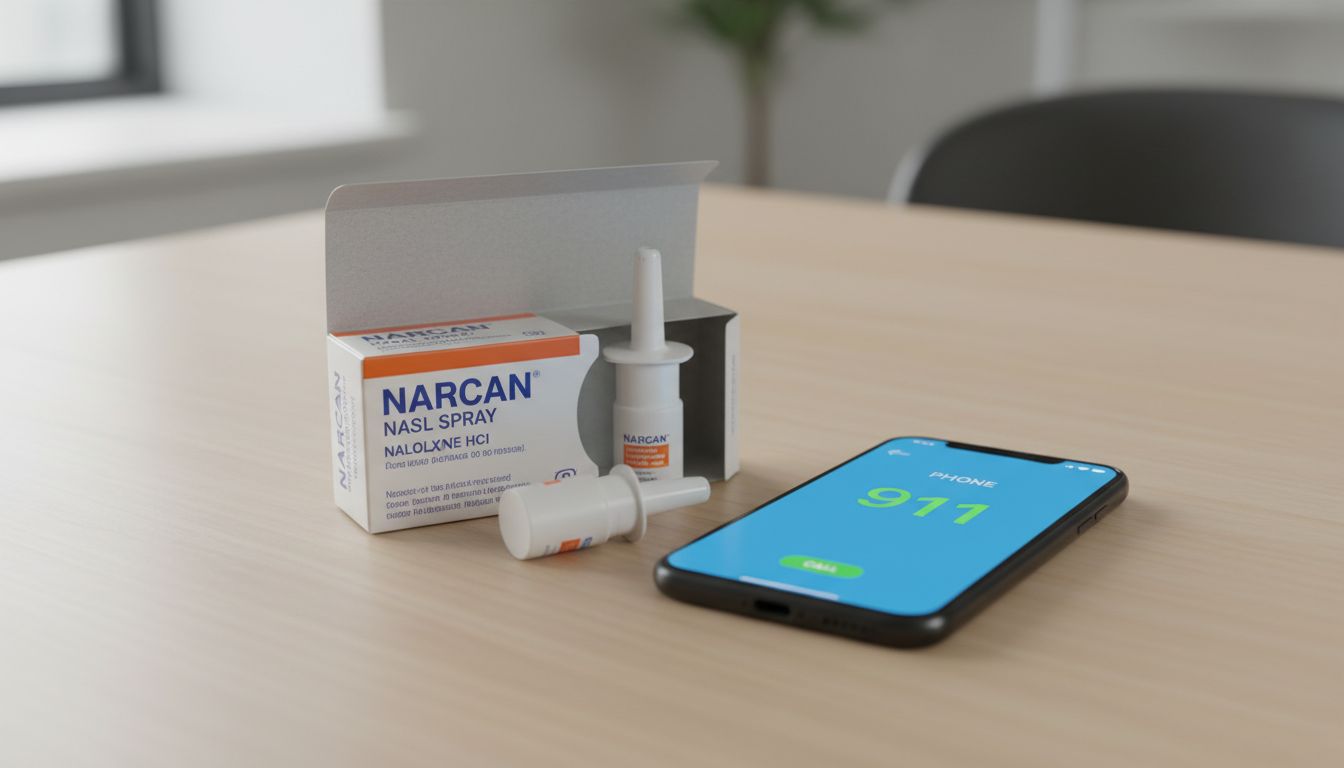
Call 911 immediately. Then administer naloxone (Narcan) if available. Turn the person on their side. Stay with them until help arrives. You are protected by law. The legal immunity applies the moment you make the call. Do not wait. Do not drive them to the hospital yourself — EMS has lifesaving equipment you don't.
Crisis line: (888) 568-9930
What Indiana's Good Samaritan Law Actually Says
Indiana's overdose intervention statute (IC 16-47-11.5) provides immunity in two key ways:
1. Immunity for the Person Who Calls 911
If you call 911 or take someone to an emergency room because of a drug overdose, you cannot be arrested, charged, or prosecuted for:
- Possession of a controlled substance (the drugs found on you or at the scene)
- Possession of drug paraphernalia (pipes, syringes, etc.)
- Visiting a common nuisance (being at a location known for drug activity)
To qualify for immunity, you must:
- Provide your full legal name to emergency responders
- Remain at the scene (or at the hospital) until law enforcement and EMS arrive
- Cooperate with emergency personnel
2. Immunity for the Person Experiencing the Overdose
The person who is overdosing also receives immunity from the same charges — possession, paraphernalia, and nuisance violations. This is critical because it means neither the caller nor the victim faces criminal consequences for seeking help.
What the Law Does NOT Protect
Understanding the limits is just as important as understanding the protections. Indiana's Good Samaritan Law does not provide immunity for:
| Protected (Immune) | NOT Protected (Can Still Be Charged) |
|---|---|
| Simple drug possession | Drug dealing or manufacturing |
| Paraphernalia possession | Outstanding warrants (can still be served) |
| Visiting a common nuisance | Violent crimes (assault, domestic violence, etc.) |
| Underage alcohol possession (Lifeline Law) | DUI/OWI (if you drove to the hospital impaired) |
| Evidence found at the scene of the OD | Probation/parole violations (may still be reported) |
The most important distinction: dealing charges are not covered. If police find evidence of drug distribution — scales, large quantities, baggies, cash — those charges can still be pursued regardless of the 911 call. The immunity applies only to personal possession and use.
Indiana's Lifeline Law: Additional Protection for Minors
Indiana has a separate but related law — the Indiana Lifeline Law (IC 7.1-5-1-6.5) — that provides additional immunity specifically for people under 21 who call 911 for alcohol-related emergencies:
- Immunity from minor in possession charges
- Immunity from public intoxication charges
- Applies to both the caller and the person experiencing the emergency
- Requires the same conditions: provide name, stay at the scene, cooperate
This is particularly important for college students who may hesitate to call for help when a friend has alcohol poisoning. The Lifeline Law specifically removes the fear of MIP charges — which can affect financial aid, scholarships, and campus housing.
Naloxone (Narcan) Access in Indiana
Indiana law also makes naloxone — the opioid overdose reversal medication — widely accessible without a prescription:
- Standing order: Indiana's State Health Commissioner has issued a statewide standing order allowing any pharmacy to dispense naloxone without a personal prescription
- Immunity for administration: Any person who administers naloxone in good faith during an overdose emergency is immune from civil and criminal liability
- Free distribution: Many Indiana health departments, needle exchange programs, and harm reduction organizations distribute free naloxone kits. Find locations through the NIDA naloxone resource page
- Insurance coverage: Most Indiana insurance plans cover naloxone with little to no copay
Why People Still Don't Call: The Fear Gap
Despite the legal protections, research consistently shows that most people don't know about Good Samaritan laws — or don't trust them. Common fears include:
- "The police will still arrest me" — The law explicitly prevents arrest for covered offenses. Officers who arrive at an overdose scene are trained on the immunity provisions.
- "I have a warrant" — This is a legitimate concern, as outstanding warrants are not covered by immunity. However, the alternative — letting someone die — is worse. Most jurisdictions prioritize the medical emergency over warrant service at the scene.
- "I'll be investigated for dealing" — If you are a user, not a dealer, the immunity protects you. Call 911. The risk of investigation is far lower than the certainty of death if you don't call.
- "My probation officer will find out" — Probation violations are a gray area. However, many Indiana courts have implemented policies that do not penalize probationers for Good Samaritan calls. Talk to your PO or attorney about your county's policy.
What to Do During an Overdose: Step by Step
- Call 911 immediately. Tell the dispatcher: "Someone is not breathing / is unconscious / I think they're overdosing." Give the exact address.
- Administer naloxone (Narcan) if available. Spray into one nostril. If no response in 2-3 minutes, give a second dose in the other nostril.
- Begin rescue breathing if the person is not breathing: tilt head back, lift chin, give one breath every 5 seconds.
- Place them on their side (recovery position) to prevent choking if they vomit.
- Stay with them. Do not leave. This is both a legal requirement for immunity and a moral imperative — the naloxone may wear off before the opioids do, causing a second overdose.
- Give your full name to EMS and law enforcement when they arrive. Cooperate fully. This activates your immunity.
After the Overdose: Connecting to Treatment
Surviving an overdose is a critical intervention point — people are most receptive to treatment in the hours and days following a near-death experience. Indiana resources include:
- SAMHSA National Helpline: 1-800-662-4357 (free, confidential, 24/7)
- Indiana treatment facilities: Browse by city — Indianapolis, Fort Wayne, Evansville, South Bend
- MAT providers: Suboxone clinics and methadone programs can start medication-assisted treatment quickly
- Medical detox: Safe, supervised withdrawal management
- Insurance verification: Check what your plan covers before choosing a program
The person who overdosed should not leave the ER without at least a referral to addiction treatment. If the hospital doesn't offer one, call (888) 568-9930 for free help finding a program.
How Indiana's Law Compares to Other States
Not all Good Samaritan overdose laws are created equal. Indiana's law is considered moderately protective compared to other states:
| Feature | Indiana | Strongest State Laws |
|---|---|---|
| Possession immunity | Yes | Yes (all 50 states + DC) |
| Paraphernalia immunity | Yes | Yes |
| Probation/parole protection | Not explicitly | Some states (CO, NM) explicitly protect |
| Applies to caller + victim | Yes | Yes |
| Warrant protection | No | Few states protect against warrant service |
| Repeat use allowed | Yes — no limit on uses | Some states limit to first use only |
One notable strength of Indiana's law: there is no limit on how many times you can invoke the immunity. Some states restrict Good Samaritan protections to a person's first overdose call. Indiana does not — you are protected every time you call, recognizing that addiction is a chronic condition and overdoses may recur during the recovery process.
The Math Is Simple: Always Call
Here is the calculation that should override every other concern:
Worst case: You might be served an outstanding warrant (but the person lives). You will NOT be charged for possession or paraphernalia. You may save a life.
If You Don't Call 911Worst case: The person dies. You could face criminal investigation for their death. In Indiana, providing drugs that cause a fatal overdose can result in dealing resulting in death charges — a Level 1 felony carrying 20-40 years in prison.
The legal risk of calling is almost always less than the legal risk of not calling — and the moral calculus is not even close.
Advocacy and Policy Improvements
While Indiana's Good Samaritan Law saves lives, advocates continue pushing for improvements:
- Explicit probation/parole protection: Adding language that Good Samaritan calls cannot be used as evidence of probation or parole violations
- Education mandates: Requiring that the law be posted in pharmacies, emergency rooms, and shared with all people entering the criminal justice system
- Data collection: Tracking how often the law is invoked and whether it correlates with reduced overdose deaths at the county level
- Expanded Narcan distribution: Increasing free naloxone availability in treatment desert counties where pharmacies may not stock it
If you want to support these efforts, contact your state representative or connect with Indiana harm reduction organizations. Every expansion of protection means more people will call when it matters most.
For immediate help finding addiction treatment in Indiana, call (888) 568-9930 or verify your insurance to explore covered options. Recovery starts with surviving — and surviving starts with making the call.