
Teen Drug Use in Indiana: Warning Signs and How Parents Can Help
Indiana Youth Survey data on teen substance trends. Warning signs by substance, conversation scripts for parents, CRAFT method, when to seek help, and Indiana prevention resources.



As a parent in Indiana, few fears run deeper than the possibility of your teenager using drugs or alcohol. The reality is that substance use commonly begins during adolescence — the National Institute on Drug Abuse reports that approximately 7.4% of adolescents aged 12–17 had a substance use disorder in the past year, and the earlier use begins, the greater the lifetime risk of developing addiction.
This guide is written directly for parents. It covers what Indiana teens are actually using in 2026, the specific warning signs to watch for organized by substance, evidence-based conversation strategies that work with adolescents, when casual experimentation has crossed into territory that requires professional help, and the treatment options available for adolescents across Indiana.
The prefrontal cortex — responsible for decision-making, impulse control, risk assessment, and consequence evaluation — does not fully develop until approximately age 25. This means teenagers are neurobiologically predisposed to take risks, seek novelty, and underestimate consequences. They are not being defiant — their brains are literally wired for exploration, making them uniquely vulnerable to substance use.
Source: NIDA Principles of Adolescent Substance Use Disorder Treatment
Teen Substance Use in Indiana: Current Data
Understanding what Indiana teens are actually using — not what parents assume — is critical for effective prevention. According to the Indiana Youth Survey and Indiana SEOW data:
- Cannabis: The most commonly used illicit substance among Indiana teens. Vaping THC concentrates has surpassed smoking flower as the primary consumption method, making detection harder (no lingering smoke smell).
- Nicotine vaping: The vaping epidemic continues to affect teens disproportionately. Flavored disposable vapes (Elf Bar, Lost Mary, ZYNN) are the delivery method of choice, easily concealed and passed between students.
- Alcohol: Binge drinking rates among Indiana teens have declined over the past decade but remain significant, with spikes around prom season, homecoming, graduation, and college football tailgating culture.
- Prescription drug misuse: Diverting parents' and grandparents' medications is common — particularly Adderall (as a study drug), Xanax (for anxiety or recreation), and opioid painkillers left over from dental procedures or surgeries.
- Counterfeit pills: This is the deadliest emerging threat. Fentanyl-laced fake Percocet, Xanax, and Adderall pills sold via social media (Snapchat, Instagram, Telegram) have killed teenagers across Indiana. A single pill can contain a lethal dose of fentanyl. The DEA reports that 7 in 10 seized counterfeit pills contain a potentially lethal dose.
Any pill not dispensed by a licensed pharmacy may contain fentanyl. Teens buying "Percocet" or "Xanax" on Snapchat are gambling with their lives. One pill can kill. Talk to your teen about this specific threat — it is unlike anything previous generations faced.
Warning Signs by Substance Type
| Substance | Physical Signs | Behavioral Signs |
|---|---|---|
| Cannabis | Red/bloodshot eyes, increased appetite, lethargy, sweet or skunky smell on clothing or in room | Declining grades, withdrawal from sports/activities, new friend group, unusual laughter or paranoia |
| Vaping (nicotine/THC) | Unexplained coughing, sweet fruity smells, increased thirst, nosebleeds, frequent bathroom breaks | Small USB-shaped devices, charger cables for unknown devices, increased secrecy with belongings |
| Alcohol | Slurred speech, coordination problems, smelling like alcohol or heavy mouthwash/cologne to cover it | Missing alcohol from home, empty containers hidden in room/backpack, coming home later than expected |
| Prescription pills | Unusual drowsiness or uncharacteristic hyperactivity, constricted or dilated pupils | Missing medications from family medicine cabinet, pill bottles or baggies found in room, asking about parents' medications |
| General warning signs | Dramatic weight change, changes in sleep patterns, deteriorating personal hygiene | Sudden friend group change, extreme secrecy with phone, declining grades, loss of interest in hobbies, money or valuables disappearing from home |
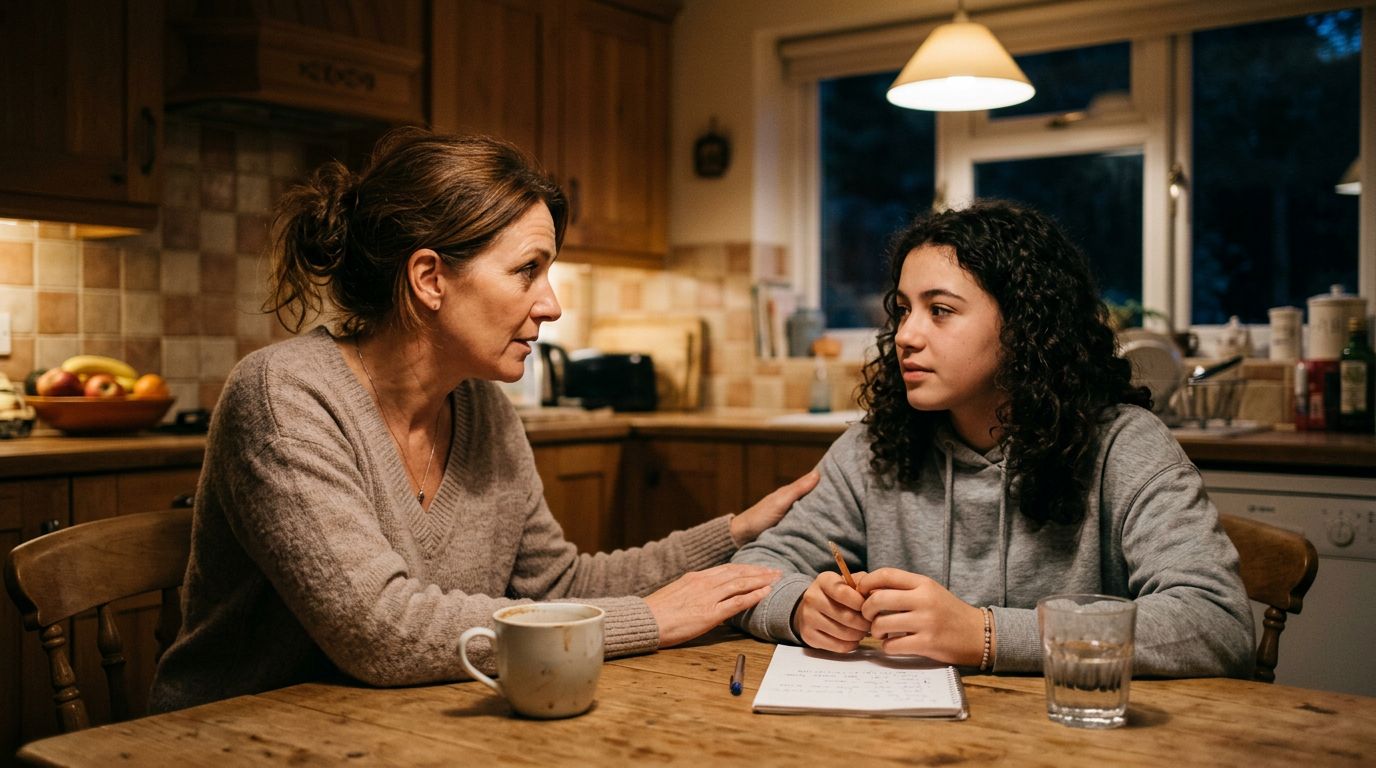
How to Talk to Your Teen About Drugs and Alcohol
The way you have this conversation matters more than what you say. Evidence-based approaches from Partnership to End Addiction:
- Start early and be ongoing: Don't wait for a crisis. Regular, brief conversations (even 5 minutes) are far more effective than one dramatic sit-down talk. Start in middle school and continue through high school.
- Listen more than you lecture: Ask open-ended questions that invite dialogue. "What are kids at your school saying about vaping?" opens a conversation. "Don't you dare vape" shuts one down.
- Be honest about risks without being hysterical: Teens have excellent BS detectors. Share facts and real consequences — not exaggerated scare stories that they'll dismiss. "Fentanyl is in counterfeit pills and one pill can kill" is factual. "Marijuana will ruin your life" is not credible to a teen who sees functioning adults use it.
- Acknowledge their reality: Peer pressure is real. Social media normalizes substance use. Academic stress drives some teens to stimulants. Validate their experience before prescribing solutions.
- Set clear expectations and consequences: State your family's rules clearly, explain the reasoning, and be consistent with consequences. "Our rule is no substances. If I find evidence of use, this is what will happen."
- Give them exit strategies: Role-play refusal scenarios. Give them specific words to use: "No thanks, I'm driving," "I have a game tomorrow," or the classic "blame your parents" technique: "My mom drug tests me."
- Address social media explicitly: Discuss that drug dealers operate openly on Snapchat and Instagram. That counterfeit pills sold as "Percocet" or "Xanax" online have killed teenagers. That even accepting a pill from a friend is gambling with fentanyl.
When to Seek Professional Help
Not all teen experimentation requires professional intervention, but these situations do — seek help immediately:
- You find drugs, paraphernalia, or counterfeit pills in their room, backpack, or car
- They have been arrested for a drug- or alcohol-related offense
- Academic performance has collapsed — multiple failing grades, truancy, school discipline
- They are withdrawn, depressed, or expressing suicidal thoughts — the intersection of adolescent mental health and substance use is particularly dangerous
- Signs of physical dependence: Withdrawal symptoms (shaking, sweating, nausea, anxiety) when not using
- Escalation: Using harder substances, using more frequently, using alone
- Previous conversations and consequences have not changed behavior — they continue despite clear rules and consequences
When in doubt, err on the side of professional assessment. A licensed counselor can evaluate whether your teen's behavior is within the range of normal experimentation or has crossed into substance use disorder territory.
Treatment Options for Teens in Indiana
Adolescent substance use treatment differs from adult treatment in critical ways — it must account for brain development, school, family dynamics, and the fact that most teen substance use is intertwined with other issues (anxiety, depression, ADHD, trauma, peer pressure).
- Adolescent treatment programs: Age-appropriate treatment with educational continuation — teens don't fall behind in school while getting help
- Outpatient counseling: Individual and family therapy while maintaining school attendance and social connections
- Intensive Outpatient Programs (IOP): Structured after-school programming (3 evenings per week) for moderate severity
- Residential treatment: For severe cases — immersive treatment with on-site schooling
- School-based programs: Many Indiana schools have Student Assistance Programs (SAPs) that provide counseling and early intervention on campus
The Role of Family Therapy
Family therapy is the single most effective treatment modality for adolescent substance use — more effective than individual therapy alone. Research-backed models include:
- Multidimensional Family Therapy (MDFT): Addresses the teen's substance use within the context of family, peers, school, and community. Works with the teen AND parents simultaneously. Strong evidence base for adolescent cannabis and alcohol use.
- Functional Family Therapy (FFT): Short-term (8–12 sessions), evidence-based intervention that improves family communication, reduces conflict, and addresses the family dynamics that contribute to teen substance use.
- CRAFT (Community Reinforcement and Family Training): Teaches parents specific behavioral strategies to encourage their teen to enter and remain in treatment — without confrontation or ultimatums. Focuses on reinforcing positive behavior and allowing natural consequences.
Prevention Resources for Indiana Families
- Partnership to End Addiction: Free parent helpline (1-855-378-4373), text support, and evidence-based resources for every stage of concern
- Indiana Prevention Resource Center: School and community prevention programs, Indiana Youth Survey data, local prevention coalition directory
- Family resources: Support for Indiana families affected by addiction
- College student resources: For teens transitioning to college environments
- Verify your teen's insurance coverage — most plans cover adolescent behavioral health services
- SAMHSA Helpline: 1-800-662-4357 — request adolescent-specific referrals
Your teenager needs you — even when they push you away, roll their eyes, and slam their door. If you're worried, trust your instincts. Parents who intervene early give their children the best chance at a healthy, substance-free adulthood. Call 1-855-378-4373 (Partnership to End Addiction parent helpline) for confidential guidance, or take our assessment.