Rehabs Offering CBT (Cognitive Behavioral Therapy)

Showing 20 of 54 Results (filtered)
Featured Rehab Centers

91 West Mound Street, Nashville, IN 47448



Addiction Rehab Centers - ARC at Fox Hill | Drug & Alcohol Rehab - Mooresville Indiana
Mooresville, Indiana
12168 N Mann Rd, Mooresville, IN 46158

Crossroads Healing Center - Addiction & Mental Health Treatment in Indiana
Connersville, Indiana
450 Erie Ave, Connersville, IN 47331
Get Personalized Rehab Matches in 60 Seconds
Tell us a few details and we’ll show a personalized shortlist of verified Indiana rehabs, making it simple to compare options and choose your next step with confidence.



Indiana Center For Recovery - Alcohol & Drug Rehab Center Carmel
Carmel, Indiana
14555 Hazel Dell Pkwy #140, Carmel, IN 46033



Indiana Treatment Centers
Columbus, Indiana
1888 Poshard Dr, Columbus, IN 47203



NorthShore Health Frontline Foundations
Chesterton, Indiana
801 Broadway Ave, Chesterton, IN 46304



Addiction Rehab Centers - ARC | Drug & Alcohol Rehab - Addiction Treatment in Indianapolis, IN
Indianapolis, Indiana
7322 Noel Rd, Indianapolis, IN 46278

CleanSlate Outpatient Addiction Medicine
Noblesville, Indiana
18051 River Rd Suite 101, Noblesville, IN 46062



Hickory Treatment Centers
Indianapolis, Indiana
3960 Southeastern Ave Suite 200, Indianapolis, IN 46203



1501 A St NE, Linton, IN 47441



Restored Life Continuum of Care
Kokomo, Indiana
302 S Reed Rd, Kokomo, IN 46901



See Purpose Addiction Treatment Center Indiana
Bloomfield, Indiana
3237 IN-157, Bloomfield, IN 47424



Sunrise Recovery - Drug and Alcohol Women's Rehab in Clarksville
Clarksville, Indiana
1610 Blackiston View Dr, Clarksville, IN 47129



Boca Recovery Center - Indiana Drug and Alcohol Rehab
Huntington, Indiana
3040 W Park Dr, Huntington, IN 46750



Cardinal Recovery
Franklin, Indiana
1130 West Jefferson St, Franklin, IN, 46131



Indiana Center for Recovery - Alcohol & Drug Rehab Center Bedford
Bedford, Indiana
1600 23rd St, Bedford, IN 47421



Indiana Center for Recovery - Alcohol & Drug Rehab Center Indianapolis
Indianapolis, Indiana
5510 S Emerson Ave, Indianapolis, IN 46237



CleanSlate Outpatient Addiction Medicine
Warsaw, Indiana
2936 Frontage Rd, Warsaw, IN 46580



The Loft Recovery
Kokomo, Indiana
1700 S Main St, Kokomo, IN 46902


House of Hope of Madison County
Anderson, Indiana
902 High Street, Anderson, IN 46012
Why Trust Indiana Rehabs
As Hoosiers helping Hoosiers, we understand the unique challenges our communities face. Our team meticulously verifies every Indiana treatment center, ensuring you find trusted, local care that truly understands your journey.
About our listingsLevels of Care
Explore popular treatment options by levels of care, from flexible treatment in Outpatient centers to intensive care in Residential rehabs.
Free · 24/7 · Confidential
Talk to a Treatment Specialist
Call now to get matched with Indiana facilities that accept your insurance.
(888) 568-9930
Free
Ins. check
4.9★
Rating
HIPAA
Protected
Can't travel to a facility?
Licensed Indiana therapists via secure video — same-week appointments, evenings & weekends available.
Do you ever feel like your own thoughts are working against you, pulling you back into the same worries and reactions no matter how much you try to break free? It’s exhausting to feel stuck in patterns that leave you stressed or overwhelmed, especially when it seems like nothing ever really changes. The good news is that cognitive behavioral therapy is designed to help you untangle these patterns with practical, proven steps. Understanding how CBT works can open the door to a sense of control, and a new way to meet life’s challenges.
What is Cognitive Behavioral Therapy?
cognitive behavioral therapy, or CBT, is a form of talk therapy that helps you become aware of inaccurate or negative thinking so you can view challenging situations more clearly and respond to them in a more effective way. It’s built on a simple, powerful idea: your thoughts, feelings, physical sensations, and actions are all connected. Think of it like changing the lens on a camera. If the lens is distorted, the picture will be, too. CBT helps you adjust that lens, allowing you to see yourself, others, and the world with greater clarity.
Developed by psychiatrist Aaron Beck in the 1960s, this approach is different from therapies that focus on your past. While your history is important, CBT concentrates on your present-day challenges and provides you with practical skills to improve your state of mind right now. It’s an active and collaborative process. You work with your therapist to identify specific problems and develop strategies to overcome them. The goal isn’t just to talk about your feelings, but to learn new coping skills that change how you think and behave, leading to lasting change[1]. To learn more about the fundamentals, you can explore the core principles of CBT therapy.
CBT and thoughts, feelings and behaviours
The core of CBT is the "cognitive model," often visualized as a triangle connecting thoughts, feelings, and behaviors. This model shows how they influence one another. What you think about a situation affects how you feel emotionally and physically, which in turn affects what you do. It’s a cycle that can either trap you in a negative loop or empower you to create a positive one.
Here’s a simple example: Imagine you give a presentation at work and your boss doesn’t smile (the situation). Your automatic thought might be, "I messed up the presentation." This thought immediately triggers feelings of anxiety and shame. As a result of these emotions, your behavior might be to avoid your boss for the rest of the day. CBT works by helping you intervene at the "thought" stage. A therapist would help you challenge that initial thought. Is it a fact you messed up, or just an interpretation? Could your boss be having a bad day? By examining and changing your thinking to something more balanced, like, "I did my best, and I can ask for feedback later," you can change the resulting feelings and behavior, breaking the cycle.
What CBT is for

One of the greatest strengths of CBT is its versatility. It's one of the most researched forms of therapy and has proven effective for a wide range of mental and emotional health conditions. It gives patients practical tools to manage their symptoms and improve their daily lives. Because it’s so adaptable, a therapist can tailor the approach to fit your specific needs and goals.
CBT is widely used to treat many issues, including:
- Anxiety disorders, including panic disorder, obsessive-compulsive disorder (OCD), and phobias
- Depression and mood disorders
- Post-traumatic stress disorder (PTSD)
- Eating disorders
- Substance use disorders
- Sleep disorders, particularly insomnia
- Bipolar disorders
- Schizophrenia
Beyond these conditions, CBT can also help people who aren't experiencing a specific mental health disorder but want to learn better ways to handle life's challenges. Many people use its techniques to manage everyday stress, navigate relationship problems, cope with grief or loss, or build self-esteem. It provides a toolkit for anyone looking to improve their emotional resilience.
Depression and anxiety disorders
CBT is particularly effective for treating depression and anxiety disorders because it directly targets the thinking patterns that fuel these conditions. For someone struggling with depression, thoughts often revolve around hopelessness, low self-worth, and self-criticism. A common CBT technique called "behavioral activation" encourages individuals to schedule positive activities, helping to counteract the withdrawal and lack of motivation that are hallmark symptoms of depression. By changing behavior first, feelings often follow.
In anxiety disorders, the mind tends to overestimate danger and underestimate its ability to cope, a pattern known as "catastrophic thinking." CBT helps people identify these fears, examine the evidence for and against them, and gradually face situations they avoid. This technique, known as exposure therapy, helps reduce fear and build confidence over time. By learning to challenge these cognitive distortions, patients can regain a sense of control over their symptoms and their lives.
Individuals with medical conditions
Living with a chronic medical condition can be incredibly stressful, and CBT can be a powerful tool for coping with the psychological impact. While therapy doesn’t cure the underlying physical illness, it can significantly improve a person's quality of life by changing how they think about and manage their symptoms. For example, individuals with chronic pain can learn to identify and modify negative thoughts about their pain, which can reduce their perception of its intensity and help them engage more fully in daily activities.
A specialized form called CBT-I is considered the gold-standard treatment for insomnia. It helps people change the thoughts and behaviors that prevent them from sleeping well, and studies show that 70-80% of patients experience significant improvement[2]. Similarly, CBT is effective in helping people manage the stress and anxiety that often accompany conditions like fibromyalgia, irritable bowel syndrome (IBS), and PTSD[3]. The focus is always on empowering the individual with practical coping skills.
What happens in CBT
If you're considering CBT, it’s helpful to know what to expect. Unlike some other forms of therapy that are more open-ended, CBT is structured, goal-oriented, and collaborative. Your therapist acts like a coach, guiding you through the process and teaching you skills you can use for the rest of your life. The entire process is designed to be transparent, so you’ll always understand what you’re working on and why.
The therapy is typically short-term, focusing on achieving specific goals in a set number of sessions[2]. You are an active participant in your own recovery. This involves not only engaging during the session but also practicing the skills you learn in your daily life. This "homework" is a key part of the process, as it helps you apply new strategies to real-world situations and solidify your progress.
Your first therapy session
Your first therapy session is mostly a conversation. It's a chance for you and your therapist to get to know each other and decide if you're a good fit. The therapist will ask questions about what brought you to therapy, your current challenges, your history, and what you hope to achieve. This initial assessment is a two-way street; it’s also your opportunity to ask questions and see if you feel comfortable with their approach.
Together, you'll start to outline some initial goals. What would you like to be different in your life? What specific problems do you want to address? This collaborative goal-setting is fundamental to CBT. It ensures that the therapy is focused on what matters most to you, making the process feel relevant and empowering from the very beginning.
What CBT sessions involve
A typical CBT session is structured to make the most of your time. You’ll usually start by checking in on your week and reviewing any "homework" you did since the last session. Then, you and your therapist will set an agenda for the current session, deciding what specific thought or behavior pattern to work on. This keeps the therapy focused and productive.
The main part of the session involves learning and practicing new skills. Your therapist might teach you about common cognitive distortions, like black-and-white thinking or jumping to conclusions, and help you learn to identify and challenge them. You might also work on behavioral strategies, like breaking down overwhelming tasks into smaller steps. You are an active participant throughout, not just a passive listener. At the end of the session, you’ll summarize what you learned and agree on new homework to practice before your next meeting.
Length of therapy
One of the most common questions people have is, "How long will this take?" CBT is designed to be a short-term treatment. While there's no magic number, a typical course of CBT often lasts between 5 and 20 sessions. For some specific issues, it might be even shorter. The goal is to provide you with the skills you need to become your own therapist, so you can continue to make progress long after your sessions have ended.
The exact duration of your therapy will depend on several factors, including the complexity of the issues you're facing, how long you've been dealing with them, and how quickly you make progress toward your goals. Your therapist will discuss a potential treatment timeline with you early on, and you’ll regularly review your progress together to ensure the therapy remains on track.
Who provides CBT?
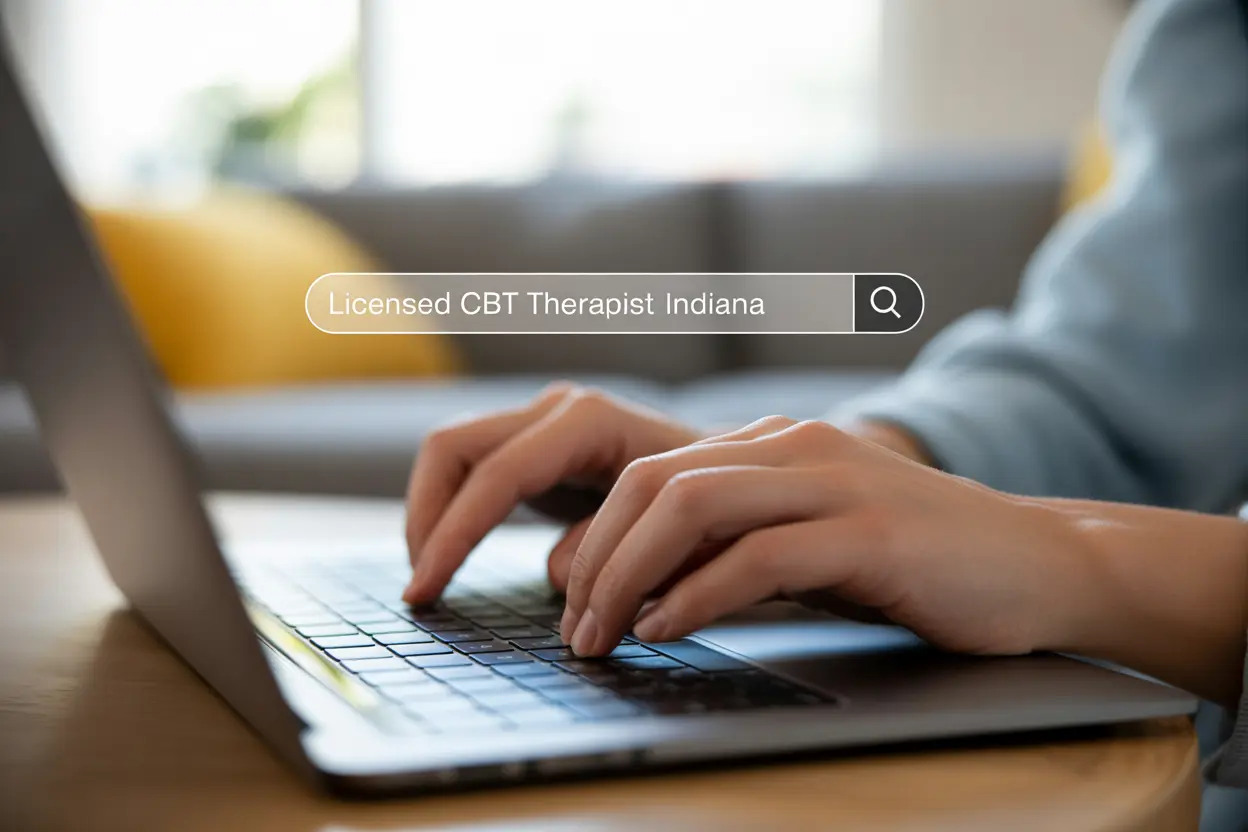
Finding the right person to guide you through CBT is just as important as the therapy itself. In Indiana, CBT is provided by a range of licensed mental health professionals. It's crucial to find someone who not only has the right credentials but also has specific training and experience in CBT. Just because a therapist offers counseling doesn't automatically mean they specialize in this structured, evidence-based approach.
Qualified professionals who often provide CBT include:
- Psychologists (Ph.D., Psy.D.): These professionals have doctoral-level degrees in psychology and are trained in various forms of therapy and assessment.
- Licensed Clinical Social Workers (LCSW): Social workers with master's degrees and advanced clinical training can provide therapy.
- Licensed Mental Health Counselors (LMHC): These counselors have master's degrees and are licensed to provide psychotherapy.
- Licensed Marriage and Family Therapists (LMFT): These therapists specialize in relationship dynamics but many also have training in CBT for individuals.
- Psychiatrists (M.D.) and Psychiatric Nurse Practitioners (NP): While they primarily manage medication, many also have training in psychotherapy, including CBT.
Check for a qualified therapist
When you're looking for a therapist, you're looking for a partner in your mental health journey. It’s important to do a little research to ensure they have the right qualifications. A qualified therapist in Indiana will have a state license, which means they’ve met specific educational and training requirements[4]. You can check their credentials through the Indiana Professional Licensing Agency.
Here are a few steps you can take to vet a potential therapist:
- Ask about their training: Don't be afraid to ask direct questions like, "What specific training do you have in CBT?" or "How much of your practice is based on CBT principles?"
- Look for certification: While not required, some therapists pursue certification from organizations like the Beck Institute or the Academy of Cognitive & Behavioral Therapies, which indicates a high level of expertise.
- Use a trusted directory: Using a reliable resource like the directory of Indiana treatment facilities can help you find professionals whose credentials have already been verified.
- Schedule a consultation: Most therapists offer a brief, free consultation. Use this time to see if their style and personality feel like a good fit for you. Trust your gut.
How to get CBT
Taking the step to find a therapist can feel like a big one, but there are several clear pathways to get the care you need in Indiana. Whether you have insurance or are looking for low-cost options, help is available. Understanding your options can make the process feel much more manageable.
Medicaid often covers behavioral health services, including therapies like CBT, making it accessible for many individuals and families[5]. However, even with coverage, many people in Indiana who need treatment for issues like substance use disorder don't receive it[6]. Knowing where to look is the first step toward closing that gap.
Speak to a GP
A great first step can be talking to your primary care physician or general practitioner (GP). Your doctor already knows your medical history and can be a trusted source for a referral to a mental health professional. They can help you find a qualified therapist in your area and may even be able to recommend someone who specializes in the specific challenges you're facing.
Your GP can also help rule out any underlying medical conditions that might be contributing to your symptoms. Sometimes, issues like thyroid problems or vitamin deficiencies can mimic symptoms of depression or anxiety. A quick check-up can ensure you're getting the right kind of care from the start.
Other ways to get CBT
If you prefer to find a therapist on your own, there are many excellent resources available. Taking control of the search can be an empowering way to begin your journey.
- Use an online directory: Websites like ours allow you to search for providers in Indiana and filter by specialty (CBT), location, and more. This is one of the easiest ways to see who is available in your community.
- Contact your insurance provider: Your insurance plan is a direct route to finding care. Call the number on the back of your card or log into their website to get a list of in-network therapists. This ensures your sessions will be covered.
- Check with your employer: Many companies offer an Employee Assistance Program (EAP), which often includes a set number of free counseling sessions. It's confidential and a great, no-cost way to get started.
- Explore university resources: If you're a student, your university's health or counseling center likely offers free or low-cost therapy services.
- Look for state resources: Government websites can also be a valuable tool. For instance, you can find information on Indiana Medicaid Mental Health & Addiction Services through official channels.
Your Next Step Toward Positive Change
cognitive behavioral therapy is more than just a type of treatment; it's a way of learning to become your own best advocate. It provides practical, proven skills that empower you to manage your thoughts, change your behavior, and improve your quality of life. The evidence shows that CBT therapy can have a meaningful impact on reducing symptoms related to substance use and other mental health challenges[7]. The journey starts with the hopeful, proactive step of finding the right therapist to guide you.
You don't have to navigate these challenges alone. Taking the first step to find help is a sign of strength. If you are ready to explore your options and connect with a qualified professional, our team at Indiana Rehabs is here to support you. Call us at (888) 568-9930 or contact us today to find the right path forward for your health and well-being.
Frequently Asked Questions About Cognitive Behavioral Therapy (CBT)
What is the main goal of cognitive behavioral therapy?
The main goal of Cognitive Behavioral Therapy (CBT) is to help you identify and change unhelpful thinking and behavior patterns. It’s less about digging into your past and more about giving you practical skills to handle present-day challenges.
By learning to look at situations more clearly and respond differently, you can reduce distressing symptoms and improve your daily life. Many people describe it as learning to become their own therapist.
How do I know if CBT is right for me?
CBT may be a good fit if you're looking for a practical, goal-oriented therapy to address specific challenges like anxiety, depression, or stress. It works well for people who want to learn concrete coping skills and are motivated to take an active role in their recovery.
An initial consultation with a therapist is the best way to determine if the approach aligns with your personal needs and goals. It gives you a chance to see if you feel comfortable with their style.
What's the difference between CBT and other therapies?
The main difference is that CBT is highly structured, focuses on present-day problems, and is typically a short-term approach. While some therapies explore past experiences in-depth, CBT concentrates on your thoughts and behaviors in the here and now.
You work with your therapist like a coach, setting clear goals and learning specific skills to solve current issues. The process is very active and collaborative.
What are some common CBT techniques?
CBT uses several hands-on techniques to help you reframe thoughts and change behaviors. Some of the most common include:
- Cognitive Restructuring: Learning to identify, challenge, and change negative or inaccurate thoughts.
- Behavioral Activation: Intentionally scheduling positive activities to improve your mood and motivation.
- Exposure Therapy: Gradually and safely confronting fears to reduce anxiety over time.
Your therapist will guide you in using the techniques that best fit your goals.
How many sessions of CBT will I need?
CBT is designed as a short-term therapy, so a full course often lasts between 5 and 20 sessions. The goal is to equip you with skills you can use independently long after treatment ends.
The exact number of sessions depends on your specific needs, the complexity of the issue, and the goals you set with your therapist. Some people see progress quickly, while others benefit from more time to practice new coping strategies.
- Suicide Prevention Resource Center. (2024). cognitive behavioral therapy for suicidal behavior. Suicide Prevention Resource Center. sprc.org
- Sleep Foundation. (2025). cognitive behavioral therapy for insomnia (CBT-I): An Overview. Sleep Foundation. sleepfoundation.org
- U.S. Department of Veterans Affairs. (2025). cognitive behavioral therapy for insomnia With Prolonged Exposure for Comorbid PTSD and Insomnia. U.S. Department of Veterans Affairs. ptsd.va.gov
- Cornell Law School Legal Information Institute. (2016). 405 IAC 5-21.8-2 - Definitions. Cornell Law School Legal Information Institute. law.cornell.edu
- KFF. (2019). State Options for Medicaid Coverage of Inpatient Behavioral Health Services. KFF. kff.org
- Substance Abuse and Mental Health Services Administration. (2022). 2022 National Survey on Drug Use and Health: State-Specific Tables (Indiana). Substance Abuse and Mental Health Services Administration. samhsa.gov
- Magill, M. et al. (2023). An Evaluation of cognitive behavioral therapy for Substance Use Disorders: An Updated Meta-analysis. Journal of Substance Abuse Treatment. pmc.ncbi.nlm.nih.gov