
Rehabs Offering Compassion-Focused Therapy (CFT)

Showing 6 of 6 Results (filtered)
Featured Rehab Centers

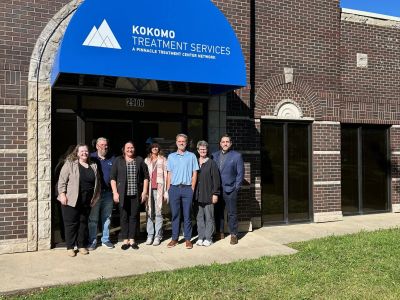

Pinnacle Treatment Centers - Kokomo
Kokomo, Indiana
2906 S. Reed Rd. Kokomo, IN 46902



Avenues Recovery Center at Indianapolis
Indianapolis, Indiana
7960 Shadeland Ave, Indianapolis, IN 46250



Kentuckiana Integrative Medicine
Jeffersonville, Indiana
405 E Court Ave #102, Jeffersonville, IN 47130
Get Personalized Rehab Matches in 60 Seconds
Tell us a few details and we’ll show a personalized shortlist of verified Indiana rehabs, making it simple to compare options and choose your next step with confidence.


First City Recovery Center
Kokomo, Indiana
317 W Jefferson St, Kokomo, IN, 46901
Pinnacle Treatment Centers - 581 E. Main Street
Hagerstown, Indiana
581 E. Main Street Hagerstown, IN 47346
Southwestern Behavioral Healthcare - Faren E. Levell Center
Evansville, Indiana
410 Mulberry St. Evansville, IN 47713
Why Trust Indiana Rehabs
As Hoosiers helping Hoosiers, we understand the unique challenges our communities face. Our team meticulously verifies every Indiana treatment center, ensuring you find trusted, local care that truly understands your journey.
About our listingsLevels of Care
Explore popular treatment options by levels of care, from flexible treatment in Outpatient centers to intensive care in Residential rehabs.
Free · 24/7 · Confidential
Talk to a Treatment Specialist
Call now to get matched with Indiana facilities that accept your insurance.
(888) 568-9930
Free
Ins. check
4.9★
Rating
HIPAA
Protected
Can't travel to a facility?
Licensed Indiana therapists via secure video — same-week appointments, evenings & weekends available.
Do you ever feel like you’re your own toughest critic, the voice in your head quick to judge, especially when you’re hurting most? Living under that kind of pressure can make even small missteps feel overwhelming. Compassion Focused Therapy isn’t just a hopeful idea, it’s a grounded, practical approach that helps quiet that inner critic, giving you simple tools to build genuine kindness toward yourself and begin real emotional healing.

What is Compassion Focused Therapy?
Compassion Focused Therapy (CFT) is a form of psychotherapy developed to help people who struggle with high levels of shame and self-criticism. It was created by British psychologist Paul Gilbert, who saw that for many individuals, especially those dealing with chronic depression and anxiety, traditional cognitive behavioral therapy (CBT) wasn't always enough. They could understand that their negative thoughts were irrational, but they didn't *feel* any better. Gilbert realized the missing piece was compassion.
CFT blends insights from evolutionary psychology, neuroscience, and developmental psychology. It starts with a core idea: we all have what Gilbert calls a "tricky brain." Our brains evolved over millions of years with a primary goal of survival. This means we're hardwired to spot threats and react quickly, a trait that kept our ancestors safe from predators. In today's world, however, that same threat system can be triggered by modern stressors like a mistake at work or social rejection, leading our inner critic to go into overdrive.
The goal of compassion focused therapy isn’t to erase negative thoughts or feelings. Instead, CFT teaches you how to develop a compassionate part of yourself that can acknowledge your pain without judgment. It’s about learning to relate to your struggles with kindness and understanding, rather than harsh self-criticism. By doing so, you can soothe that overactive threat response and build a sense of inner safety and warmth, which is foundational for healing from issues like shame and depression[1].
Core principles of CFT
At the heart of CFT is a simple yet powerful model of how our emotions work. It suggests we have three main emotion regulation systems that evolved to help us survive and thrive. Understanding these systems helps clarify why we feel the way we do and how we can find better balance.
- The Threat System: This is our safety-first system. Its job is to detect danger and protect us. When activated, it triggers feelings like anxiety, anger, and disgust. While essential for survival, this system can become overactive, leaving us in a constant state of high alert and stress, where self-criticism often thrives.
- The Drive System: This is our motivation and achievement system. It’s what pushes us to seek resources, accomplish goals, and pursue things that feel rewarding. When this system is engaged, we feel energized, excited, and driven. It's a positive force, but an over-reliance on it can lead to burnout or feeling empty if we don't also have a sense of contentment.
- The Soothing System: This system is all about safeness, contentment, and connection. It’s activated when we feel cared for, safe, and at peace. It generates feelings of calm, warmth, and gentle happiness. This system is linked to our capacity for kindness and compassion, both for others and ourselves.
Many mental health challenges, like anxiety and depression, come from an imbalance where the threat system is constantly firing and the soothing system is underdeveloped[2]. We might be so busy scanning for dangers or chasing accomplishments that we forget how to simply feel safe and content. CFT works by intentionally teaching us how to activate and strengthen our soothing system, creating a powerful antidote to criticism and fear.
The attributes of compassion
To build our soothing system, CFT focuses on developing six key attributes of compassion. These qualities help us engage with suffering, our own and others', in a helpful, healing way.
- Sensitivity: Noticing distress and being open to it, rather than ignoring or suppressing it.
- Sympathy: Being emotionally moved by suffering, allowing yourself to feel concern.
- Distress Tolerance: The ability to sit with discomfort and painful feelings without being overwhelmed or needing to immediately shut them down.
- Empathy: Making an effort to understand someone else's experience from their perspective.
- Non-judgement: Observing thoughts and feelings without labeling them as good or bad, right or wrong.
- Caring Commitment: Having a genuine desire to alleviate suffering and actively working to bring warmth and kindness to the situation.
The skills of compassion
Alongside these attributes, CFT helps clients build practical skills that bring compassion to life. These are the tools you'll learn to use every day to change how you relate to your inner world.
- Compassionate Attention: Intentionally focusing your attention on things that are helpful and soothing, rather than getting stuck on threats or self-criticism.
- Compassionate Reasoning: Learning to think in a more supportive and understanding way. This involves questioning self-critical thoughts and considering a kinder perspective.
- Compassionate Behaviour: Taking actions that reflect care and support for yourself, such as setting boundaries, engaging in healthy activities, or seeking help when you need it.
- Compassionate Imagery: Using guided visualizations and mental images to stimulate feelings of safeness, warmth, and strength.
- Compassionate Feeling: Allowing yourself to experience feelings of warmth, kindness, and reassurance, which helps to activate the soothing system.
- Compassionate Sensation: Paying attention to the physical sensations associated with compassion, such as a gentle warmth in the chest or a relaxed posture.

How It Works
So, how does CFT actually help you build these skills and attributes? It’s an active, experiential therapy that uses specific exercises to retrain your brain. The idea is to create new neural pathways that make it easier to access your soothing system and respond to yourself with compassion, especially when your inner critic pipes up.
In therapy sessions, your therapist acts as a guide and a model. They create a safe, non-judgmental space where you can explore your struggles without fear of criticism. They'll embody the compassionate qualities they are teaching, helping you experience what it feels like to be on the receiving end of warmth and understanding. This safe relationship is often the first step for clients in learning to trust and internalize a compassionate voice.
From there, you'll work together on practical techniques designed to cultivate self-compassion. Many of these exercises are practiced both during sessions and as homework, because like any skill, compassion takes practice. The goal is to make these tools a natural part of your daily life, so you can call on them whenever you need them.
Soothing Rhythm Breathing
One of the first and most foundational techniques in CFT is soothing rhythm breathing. This is more than just a simple relaxation exercise; it’s a direct way to influence your nervous system. By consciously slowing down your breath and finding a gentle, smooth rhythm, you activate your parasympathetic nervous system. This is often called the "rest and digest" system because it tells your body that you are safe and can let go of the fight-or-flight response.
Practicing this technique helps create an immediate sense of calm and safety. Over time, it trains your body to shift out of threat mode more easily, giving you a reliable tool to manage anxiety and distress in the moment.
Compassionate imagery
Our brains are incredibly responsive to visualization. Compassionate imagery exercises use this power to create new, positive emotional experiences. A common practice is to create a "safe place" in your mind, a detailed, imaginary location where you feel completely secure and at peace. You can return to this place whenever you feel overwhelmed.
Another powerful imagery exercise is developing a "compassionate ideal." This involves imagining a figure, either real or created, that embodies perfect wisdom, strength, warmth, and non-judgment. You might visualize this figure offering you support and encouragement, helping you tap into those qualities within yourself. This isn't about seeking external validation; it's about using imagery to activate your own capacity for compassion.
Compassionate Letter-Writing
For many of us, our inner dialogue is filled with self-criticism. Compassionate letter-writing is a powerful exercise to challenge that voice. The practice involves writing a letter to yourself about a current struggle or something you feel ashamed of, but writing it from the perspective of your compassionate ideal.
This exercise helps you step outside your own head and view your situation with the kindness, wisdom, and understanding you would offer a dear friend. It externalizes a compassionate voice, making it easier to hear and eventually internalize. By repeatedly practicing this form of letter writing, you learn to generate your own kindness and support, slowly transforming that harsh inner critic into a source of gentle encouragement.
Applications
Because shame and self-criticism are at the root of so many mental health challenges, CFT has a wide range of applications. It's considered a "transdiagnostic" approach, meaning it can be helpful for people facing various conditions rather than being limited to just one. Anyone who struggles with a harsh inner critic, perfectionism, or has a hard time accepting kindness can benefit from its principles.
CFT is commonly used to treat:
- Depression: It directly targets the feelings of worthlessness and hopelessness that often accompany depression, helping individuals build a more supportive inner relationship.
- Anxiety Disorders: By activating the soothing system, CFT provides a powerful counterbalance to the overactive threat system that drives social anxiety, generalized anxiety, and panic.
- Trauma: For those who have experienced trauma, self-blame and shame are common. CFT offers a gentle way to process painful memories and develop self-compassion for one's reactions.
- Eating Disorders: These conditions are often fueled by intense body-related shame and self-criticism. CFT helps individuals cultivate a kinder, more accepting relationship with their bodies.
This approach is also incredibly relevant in addiction treatment. The cycle of substance use is often driven by deep-seated shame. Individuals may use substances to escape painful feelings of self-criticism, only to feel more shame about their use afterward. CFT can help break this cycle by addressing the underlying emotional pain[3]. By learning to treat themselves with kindness and understanding, clients can develop healthier coping mechanisms and improve their mental health, which is crucial for long-term recovery[4].
Limitations
While Compassion Focused Therapy is a promising and increasingly popular approach, it's important to have a balanced view of its effectiveness. The evidence base for CFT is growing, and studies consistently show that it can lead to significant reductions in mental health problems like depression and anxiety[1]. However, compared to more established therapies like CBT, there are fewer large-scale, high-quality studies available.
Another important consideration is what some therapists call a "fear of compassion." For individuals who have grown up in harsh or critical environments, or for whom self-criticism has felt like a protective or motivating force, receiving kindness can feel strange, unfamiliar, or even unsafe. They might worry that self-compassion will make them lazy or vulnerable. This resistance is a normal part of the process, and a skilled CFT therapist will work gently with clients to explore these fears without judgment.
The acceptability of the therapy is generally good, but like any treatment, it isn't a perfect fit for everyone. The unique exercises, such as compassionate imagery, may feel unusual at first, and it requires a willingness to engage in new ways of thinking and feeling. Ultimately, while the evidence is encouraging, more research is needed to fully understand who benefits most from CFT and how it compares to other treatments.
Finding Compassion-Focused Therapy in Indiana
If you feel that a kinder, more compassionate approach to your mental health could be right for you, the next step is finding a qualified provider. When looking for a therapist in Indiana, it’s important to find someone who is not only licensed but also has specific training in Compassion Focused Therapy. Look for credentials like psychologist (Ph.D., Psy.D.), licensed clinical social worker (LCSW), or licensed mental health counselor (LMHC).
Don’t be afraid to ask questions when you contact a potential therapist. You can ask about their training in CFT, their experience using it to treat issues similar to yours, and what a typical session might look like. A good therapist will be happy to answer your questions and help you feel comfortable. Finding the right fit is key to a successful therapeutic journey. All providers in Indiana must be licensed by the state, ensuring they meet professional standards for care[5].
Navigating mental health resources can feel overwhelming, but you don’t have to do it alone. You can use directories like the SAMHSA National Treatment Facility Locator to find qualified professionals. Our goal is to connect you with the right support here in Indiana.
A New Path Forward with Self-Compassion
Living with a harsh inner critic can feel isolating and exhausting, but it doesn't have to be a life sentence. Compassion Focused Therapy offers a clear, structured path to changing that relationship with yourself. It provides practical tools to move away from shame and self-criticism and toward a new foundation of self-kindness, warmth, and understanding. This journey is not about becoming perfect; it’s about learning to be a good friend to yourself, especially when times are tough.
Building self-compassion is a skill that takes practice, but it's a skill that can transform your well-being. If you're ready to take the first step toward healing, know that support is available. You can start by exploring resources or reaching out to a professional who can guide you. Taking that step is an act of compassion in itself. If you need help finding the right path forward, call us at (888) 568-9930. The team at Indiana Rehabs is here to help you get started. Feel free to contact us to learn more about your options.
Frequently Asked Questions About Compassion Focused Therapy
Is CFT different from CBT?
What happens in a CFT session?
Is self-compassion the same as self-esteem?
Will being compassionate to myself make me lazy?
How long does Compassion Focused Therapy take?
- (2024-07-25). A Narrative Review of Compassion Focused Therapy on Positive Mental Health and Well-Being. National Center for Biotechnology Information. pmc.ncbi.nlm.nih.gov
- (2025-07-29). The Effectiveness of Compassion Focused Therapy for the Three Flows of Compassion. National Center for Biotechnology Information. pmc.ncbi.nlm.nih.gov
- (2019-04-02). Investigating the Feasibility of Brief Compassion Focused Therapy in Opioid Use Disorder. National Center for Biotechnology Information. pmc.ncbi.nlm.nih.gov
- (2025-05-29). The Effect of Self-Compassion-Focused Interventions for People With Substance Use Disorders: A Systematic Review. National Center for Biotechnology Information. pubmed.ncbi.nlm.nih.gov
- Indiana Family and Social Services Administration. (2020-07-14). Certification and Licensure Rules and Indiana Code. Indiana Family and Social Services Administration. in.gov