Rehabs Offering Solution-Focused Therapy

Showing 7 of 7 Results (filtered)
Featured Rehab Centers


Addiction Rehab Centers - ARC at Fox Hill | Drug & Alcohol Rehab - Mooresville Indiana
Mooresville, Indiana
12168 N Mann Rd, Mooresville, IN 46158



NorthShore Health Frontline Foundations
Chesterton, Indiana
801 Broadway Ave, Chesterton, IN 46304

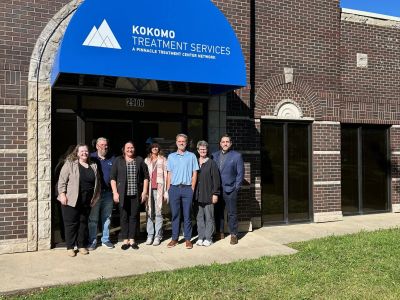

Pinnacle Treatment Centers - Kokomo
Kokomo, Indiana
2906 S. Reed Rd. Kokomo, IN 46902
Get Personalized Rehab Matches in 60 Seconds
Tell us a few details and we’ll show a personalized shortlist of verified Indiana rehabs, making it simple to compare options and choose your next step with confidence.



Avenues Recovery Center at Indianapolis
Indianapolis, Indiana
7960 Shadeland Ave, Indianapolis, IN 46250



Kentuckiana Integrative Medicine
Jeffersonville, Indiana
405 E Court Ave #102, Jeffersonville, IN 47130

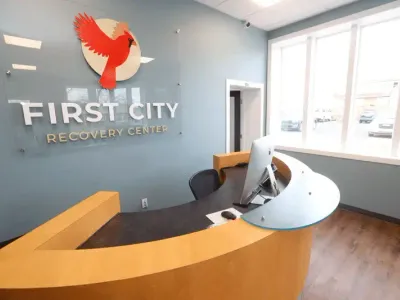

First City Recovery Center
Kokomo, Indiana
317 W Jefferson St, Kokomo, IN, 46901
Southwestern Behavioral Healthcare - Faren E. Levell Center
Evansville, Indiana
410 Mulberry St. Evansville, IN 47713
Why Trust Indiana Rehabs
As Hoosiers helping Hoosiers, we understand the unique challenges our communities face. Our team meticulously verifies every Indiana treatment center, ensuring you find trusted, local care that truly understands your journey.
About our listingsLevels of Care
Explore popular treatment options by levels of care, from flexible treatment in Outpatient centers to intensive care in Residential rehabs.
Free · 24/7 · Confidential
Talk to a Treatment Specialist
Call now to get matched with Indiana facilities that accept your insurance.
(888) 568-9930
Free
Ins. check
4.9★
Rating
HIPAA
Protected
Can't travel to a facility?
Licensed Indiana therapists via secure video — same-week appointments, evenings & weekends available.
It’s exhausting to replay the same problem in your mind, round and round, like you’re stuck in a muddy rut. Imagine the sense of relief that comes with spotting a small, solid step forward, a glimpse of hope in what felt impossible. That’s the heart of solution focused therapy. By zeroing in on your strengths and what’s possible instead of just what’s wrong, this approach gently helps you move from stuck to empowered, so real change can actually begin to feel within reach.
What is Solution-Focused Therapy?
solution-focused therapy, often called Solution-Focused Brief Therapy (SFBT), is a goal-directed approach that looks toward the future instead of digging into the past. It’s built on a simple, powerful idea: you, the client, are the expert on your own life and already have the strengths and resources you need to create change. Instead of dissecting the roots of a problem, this approach focuses on building a solution.
Developed by Steve de Shazer and Insoo Kim Berg in the late 1970s, SFBT was a shift away from traditional therapy. Their philosophy was that big problems don’t always need big, complicated solutions. Sometimes, the most meaningful change comes from identifying what’s already working, even in a small way, and doing more of it. This forward-looking stance is what makes solution focused therapy different from other methods that might spend more time analyzing your past experiences.
The three major principles of this approach are straightforward:
- Focus on strengths and solutions: The therapy intentionally shifts the conversation from what’s wrong to what’s possible. It helps you uncover the skills and resilience you might not even realize you have.
- Future-orientation: Sessions are about envisioning a preferred future and mapping out the small, realistic steps to get there. It’s about building a path forward, not just understanding how you got stuck[1].
- The client is the expert: The therapist’s role is to ask thoughtful questions that help you find your own answers. It’s a collaborative effort where you are in the driver's seat.
How It Works
Imagine sitting down with someone whose main goal is to help you see the strengths you’ve been overlooking. That’s what a session of solution-focused therapy feels like. It’s a collaborative partnership where the therapist acts as a curious facilitator, not an authority figure who has all the answers. They trust that you know, deep down, what a better future looks like for you. Their job is to help you articulate that vision and discover the tools you already possess to make it happen[2].
Sessions are structured as conversations that intentionally steer away from "problem talk" and move toward "solution talk." Instead of spending hours analyzing why a problem exists, the therapist will guide you to think about what life would be like if the problem were gone. This isn't about ignoring your struggles. It's about shifting the focus to your goal, making it feel more tangible and achievable. It’s a process that feels more like building something new than repairing something broken.
You’ll be encouraged to describe your preferred future in rich detail. From there, the conversation will explore small, practical steps you can take to move in that direction. The underlying belief is that change is constant and that focusing on a positive goal helps you notice opportunities for progress that were always there, just waiting to be seen. This approach is similar to other collaborative methods like motivational interviewing, which also centers on the client's own motivation for change.
Key Concepts and Tools
To help you shift your focus from problems to solutions, SFBT therapists use a specific set of conversational tools. Think of it as a toolbox filled with powerful questions and techniques designed to help you unlock your own potential. These aren't tests or interrogations; they are gentle, curious prompts that guide you toward discovering what’s already working in your life and how you can build upon it[3]. Let's explore some of the most common tools you might encounter.

Miracle Question (MQ)
One of the most well-known tools in SFBT is the "Miracle Question." A therapist might ask something like: "Suppose that tonight, while you are sleeping, a miracle happens and the problem that brought you here is solved. But since you were asleep, you don't know that the miracle has happened. When you wake up tomorrow morning, what will be the first small signs that would tell you things have changed for the better?"
The purpose of this question isn't to hope for an actual miracle. It’s a creative way to help you bypass the feeling of being stuck. By imagining a future where the problem is gone, you can start to define your goals in clear, concrete terms. It helps you paint a vivid picture of your preferred future, making your goal feel more real and attainable.
Scaling Questions
Scaling questions are another core technique. A therapist might ask, "On a scale of 0 to 10, where 0 is the worst this problem has ever been and 10 is the day after your miracle, where are you today?" This simple question does a few important things:
- Assesses progress: It helps you see that you aren't at a zero, acknowledging that you're already making some effort.
- Builds confidence: Recognizing that you're at a 3 or a 4, not a 0, reminds you that you have some control and things aren't entirely hopeless.
- Identifies next steps: The follow-up question is often, "What’s already helping you stay at a 3?" or "What would it take to move from a 3 to a 4?" This breaks down a big goal into a small, manageable next step.
Coping Questions
When you feel completely overwhelmed, it can be hard to see your own strength. That's where coping questions come in. A therapist might ask, "I can hear how difficult things have been for you. How have you managed to keep going even when it’s so tough?" or "What helps you get out of bed in the morning when you're feeling this low?"
These questions are designed to build resilience by helping you recognize your own perseverance. They gently guide you to see the strengths and resources you're already using to survive, even if you don’t give yourself credit for them. It’s a powerful reminder that you are more resourceful than you think.
Looking for exceptions
No problem is present 100% of the time. "Exception-finding" is the process of identifying those moments. A therapist will ask questions to uncover times when the problem was not happening or was less severe. For example, "Tell me about a time in the past week when you felt even a little bit better."
Once an exception is found, the therapist will explore it in detail: "What was different about that time? What were you doing? Who was with you?" By examining what was working during these exceptions, you can uncover hidden solutions and successful strategies you’ve already used. The goal is to help you do more of what works.
Compliments
In SFBT, compliments are more than just simple praise; they are direct affirmations of your strengths and progress. A therapist will listen carefully for signs of resilience, determination, or change and reflect them back to you. For instance, after you describe an exception, they might say, "Wow, it sounds like it took a lot of courage to handle that situation differently. How did you manage to do that?" This reinforces your capabilities and fosters a sense of empowerment, helping you see yourself as someone who can create positive change.
What to Expect
If you decide to try solution-focused therapy, you can expect a process that feels more like a hopeful, encouraging conversation than a clinical analysis. From the very first session, the focus will be on your strengths and your vision for a better future. Your therapist will be an active listener, but their role is to guide the conversation toward solutions. They will ask questions designed to get you thinking about what you want, what’s already working, and what your next small step could be.
Because it's a "brief" therapy, the goal is to be efficient and effective. While every person is different, SFBT is often delivered in approximately six sessions[4]. The focus remains on the present and future, so you likely won’t spend a lot of time dwelling on past hurts or the history of the problem, unless it helps in constructing a solution. You should expect to leave each session with a renewed sense of hope, a clearer idea of your goal, and often a small, concrete action to try before your next meeting. The entire experience is designed to be empowering, leaving you feeling more in control of your life.
What SFBT Can Help With?
solution-focused therapy is a versatile approach that has been shown to be effective for a wide range of challenges. Its focus on strengths and future possibilities makes it a helpful tool for individuals, couples, and families facing various life hurdles. Because it's adaptable, it can be applied to many different situations where a person feels stuck and wants to find a clear path forward.
Research has shown that SFBT can be a valuable treatment for many common mental health concerns[5]. Some of the issues it can help with include:
- Anxiety and stress management
- Depression and other mood disorders
- Substance use and addiction recovery
- Relationship conflicts (in couples or family therapy)
- Behavioral challenges in children and adolescents
- Work and career-related issues
- Navigating life transitions
- Building self-esteem and confidence
Benefits of SFBT
Choosing a therapeutic approach is a personal decision, and understanding the unique advantages of SFBT can help you decide if it’s the right fit. Its practical, forward-looking nature offers several key benefits that many people find appealing and effective[4]. Here are some of the main reasons people are drawn to this empowering model of therapy:
- Brief and Cost-Effective: As its name suggests, Solution-Focused Brief Therapy is designed to be short-term. By concentrating on solutions rather than problems, it often helps people achieve their goals in fewer sessions, which can make it more affordable and accessible.
- Empowering: The entire approach is built on the belief that you are the expert in your own life. It focuses on your strengths, resources, and successes, which helps build confidence and reminds you of your own ability to create change.
- Goal-Oriented: SFBT provides a clear focus and direction. You work with your therapist to define a tangible, positive vision for your future, and each session is geared toward making small, steady progress toward that goal.
- Positive Focus: By shifting the conversation to hopes, solutions, and possibilities, this approach can feel incredibly motivating. It builds momentum and hope by celebrating small wins and focusing on what’s possible, not on deficits or failures.
Effectiveness
When you’re investing your time and energy into therapy, you want to know that it works. solution-focused therapy is considered an evidence-based practice, meaning its effectiveness is supported by clinical research. Numerous studies and meta-analyses have examined its impact on a wide range of issues, and the results are consistently positive. This research gives weight to what many people have experienced firsthand: that focusing on solutions can lead to real, lasting change.

Large-scale reviews of multiple studies have found that SFBT has a significant positive effect on psychosocial and behavioral health outcomes[5]. Some studies have shown that SFBT can even be more effective than treatment-as-usual for specific challenges, such as improving symptoms of trauma-related depression[2]. This body of research confirms that for many people, SFBT is not just a hopeful philosophy but a genuinely effective approach to improving well-being.
Things to Consider
While solution-focused therapy is a powerful approach for many, it’s important to have a balanced perspective. Like any form of therapy, it may not be the perfect fit for everyone or every situation. Its focus on the future and its brief nature are strengths, but they can also be limitations depending on your individual needs. For example, if you have experienced significant past trauma and feel a deep need to process those events in detail, you might find the forward-looking nature of SFBT doesn't give you the space you need at first.
Similarly, for some severe, long-standing mental health conditions, a short-term approach might not be sufficient to create lasting stability. Some people may benefit from a longer-term therapy that delves more deeply into the origins of their struggles before moving toward future-oriented solutions.
A common question is, "What is the difference between CBT and solution-focused therapy?" Both are practical, goal-oriented therapies, but their focus differs. cognitive behavioral therapy (CBT) is more problem-focused; it works by helping you identify and change specific negative thought patterns and behaviors that are causing your current problems. SFBT, on the other hand, is solution-focused. It largely bypasses the analysis of the problem to concentrate on building your desired future and identifying the strengths you can use to get there[1].
Finding Your Path with Solution-Focused Therapy
Ultimately, solution-focused therapy offers a hopeful and empowering way to create change in your life. It’s an evidence-based approach that trusts in your ability to find your own solutions, helping you build on your strengths to move toward a better future[4]. By focusing on what’s possible instead of what’s wrong, SFBT helps you shift your perspective and take small, meaningful steps toward the life you want. If you're looking for a forward-looking, goal-oriented approach that values your expertise, this might be the right path for you.
Deciding to start therapy is a courageous step. If you're in Indiana and think that solution-focused therapy might be a good fit, help is available. You can use the Behavioral Health Treatment Services Locator to find providers near you. Taking that first step can feel overwhelming, but you don’t have to do it alone. Reach out to us at (888) 568-9930 to discuss your options, or visit our contact page to get in touch. Here at Indiana Rehabs, we are committed to helping you find the support you need to move forward.
Frequently Asked Questions About Solution-Focused Therapy
How long is solution-focused therapy?
Does solution-focused therapy work for anxiety?
Can SFBT be used for trauma?
Is SFBT the same as positive psychology?
- Schütze, M., Storch, M., & Trachsel, M. (03-30-2023). Solution-focused approaches in adult mental health research: a scoping review and a thematic analysis. Frontiers in Psychiatry. pmc.ncbi.nlm.nih.gov
- Franklin, C., Kim, J. S., et al. (September, 2021). Randomized controlled trial of solution-focused brief therapy for traumatized and substance-abusing women in a child welfare system context. Social Service Review. journals.uchicago.edu
- Campos, L. C., & da Silva, J. T. (06-21-2021). Solution-Focused Brief Therapy for substance use: A review of the evidence. Journal of Addictions & Offender Counseling. pubmed.ncbi.nlm.nih.gov
- Zhang, A., Zhang, N., & Zhang, R. (09-26-2024). Effectiveness of solution-focused brief therapy: An umbrella review of meta-analyses. General Hospital Psychiatry. pubmed.ncbi.nlm.nih.gov
- Franklin, C. et al. (04-20-2023). Solution-Focused Brief Therapy in Community-Based Services: A Systematic Review and Meta-Analysis. Research on Social Work Practice. journals.sagepub.com